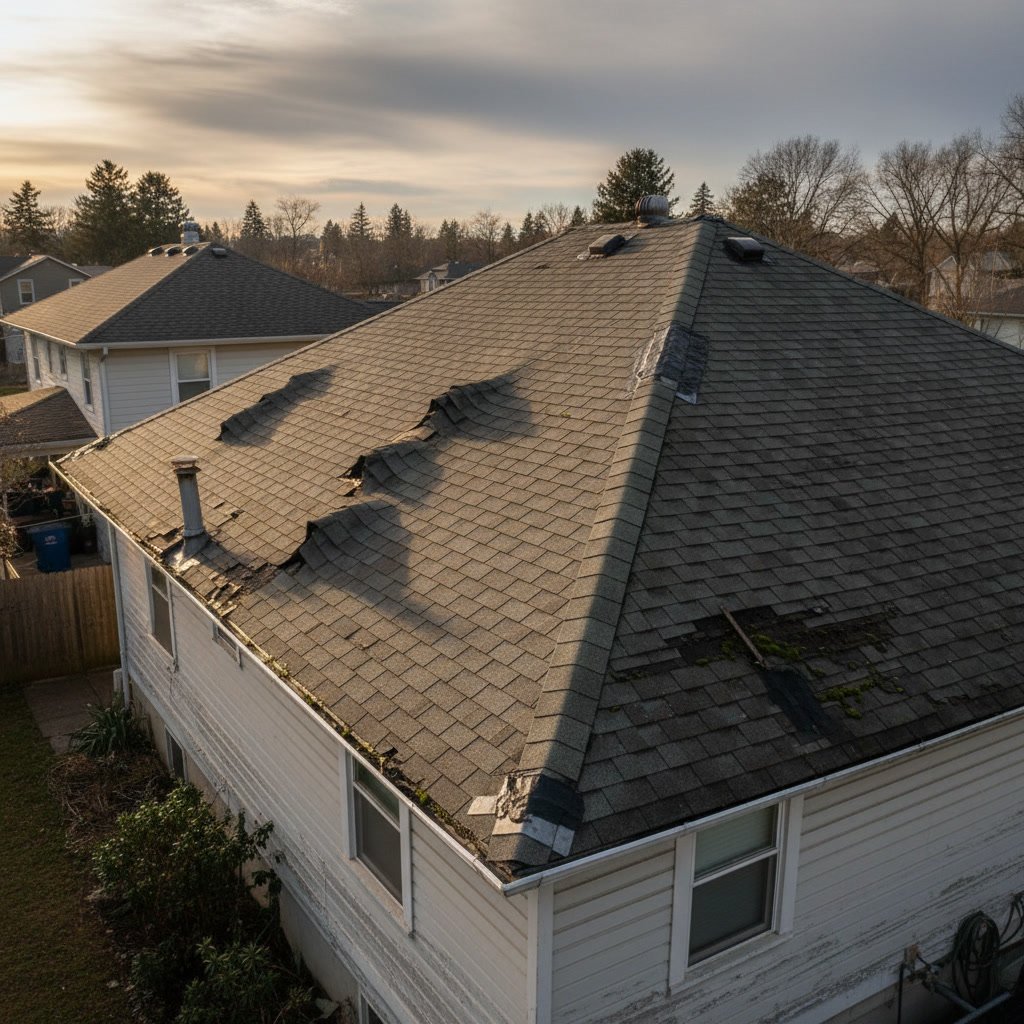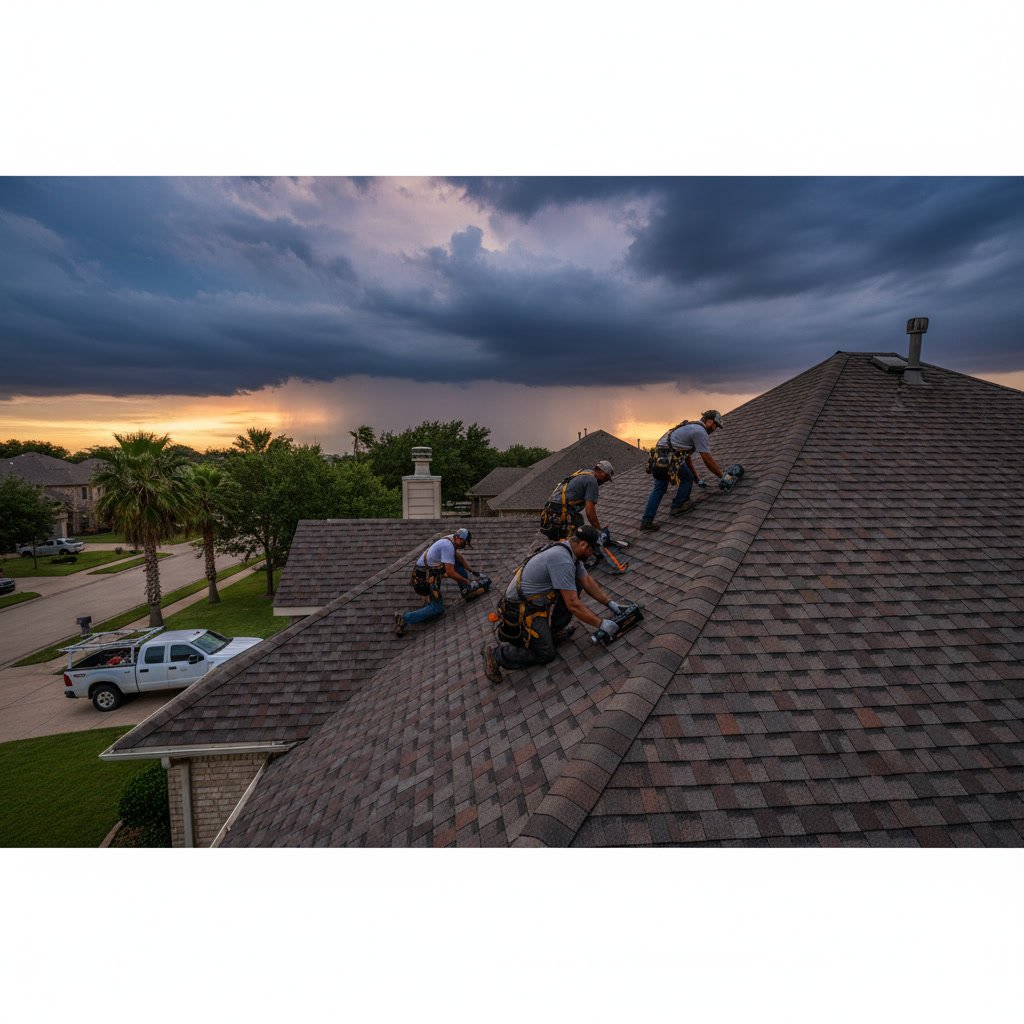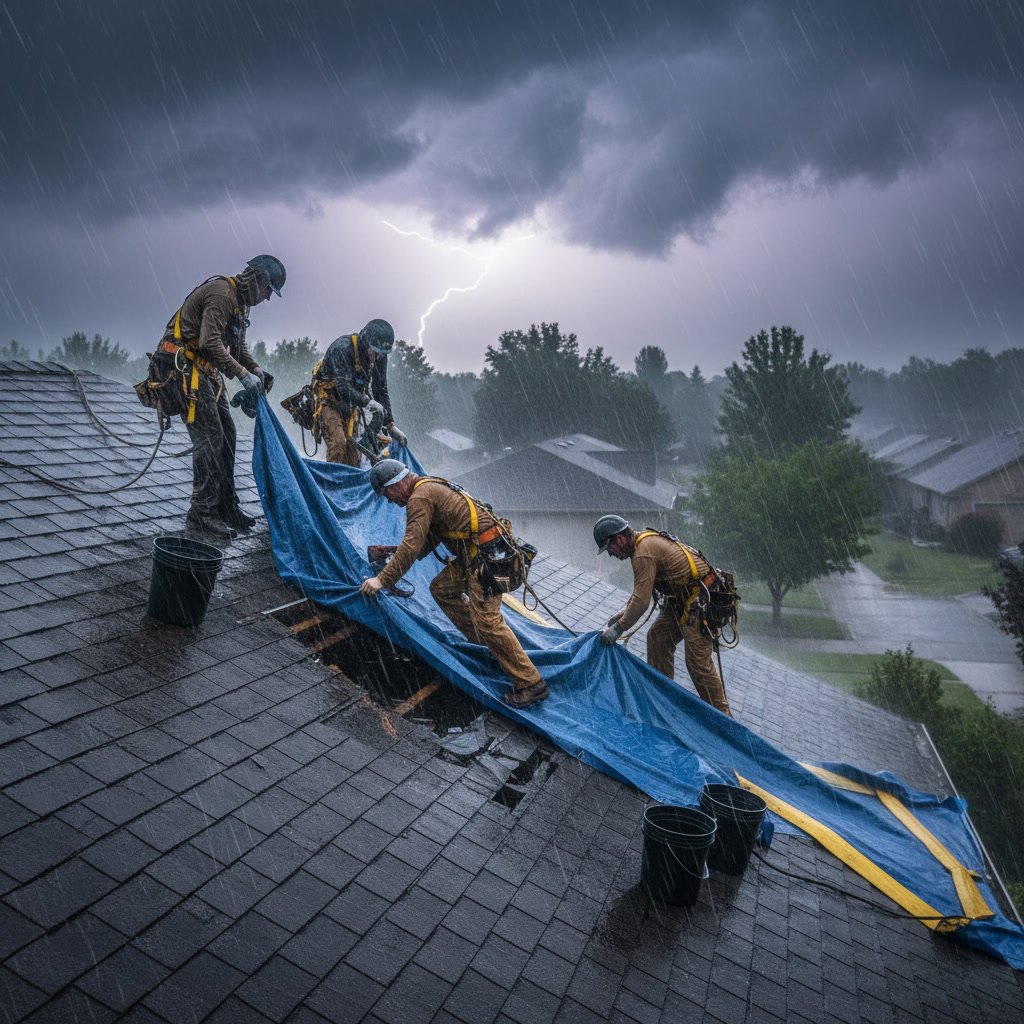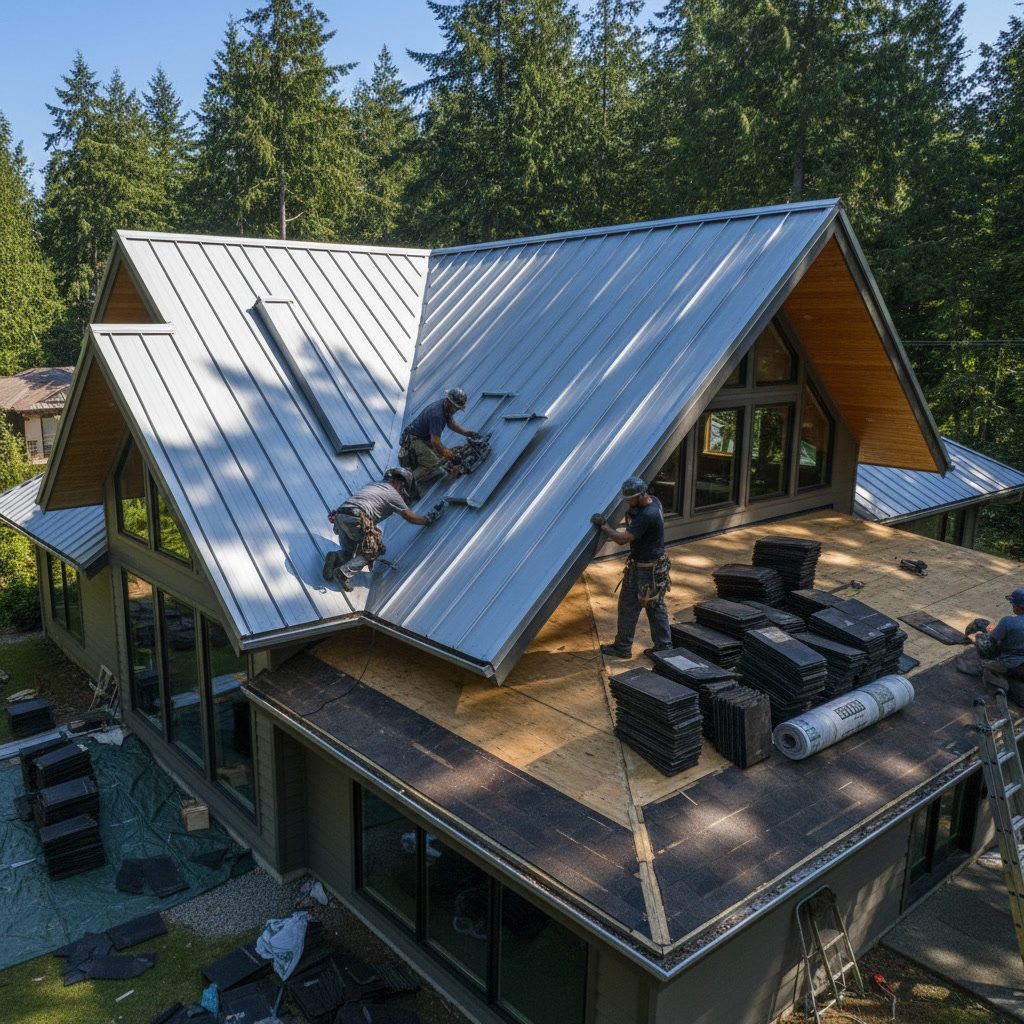
Your roof takes a beating from the Texas sun, wind, rain, and temperature swings. Over time, even the best roofing materials begin to show their age through cracks, leaks, and UV damage. Roof coatings offer a solution that can add years to your existing roof while improving energy efficiency and waterproofing without the expense of a full replacement.
This guide explains what roof coatings are, how they work, the types available, and whether they truly deliver on the promise of extending your roof’s life. You’ll also learn when coating makes sense and when replacement is the better choice.
What Are Roof Coatings
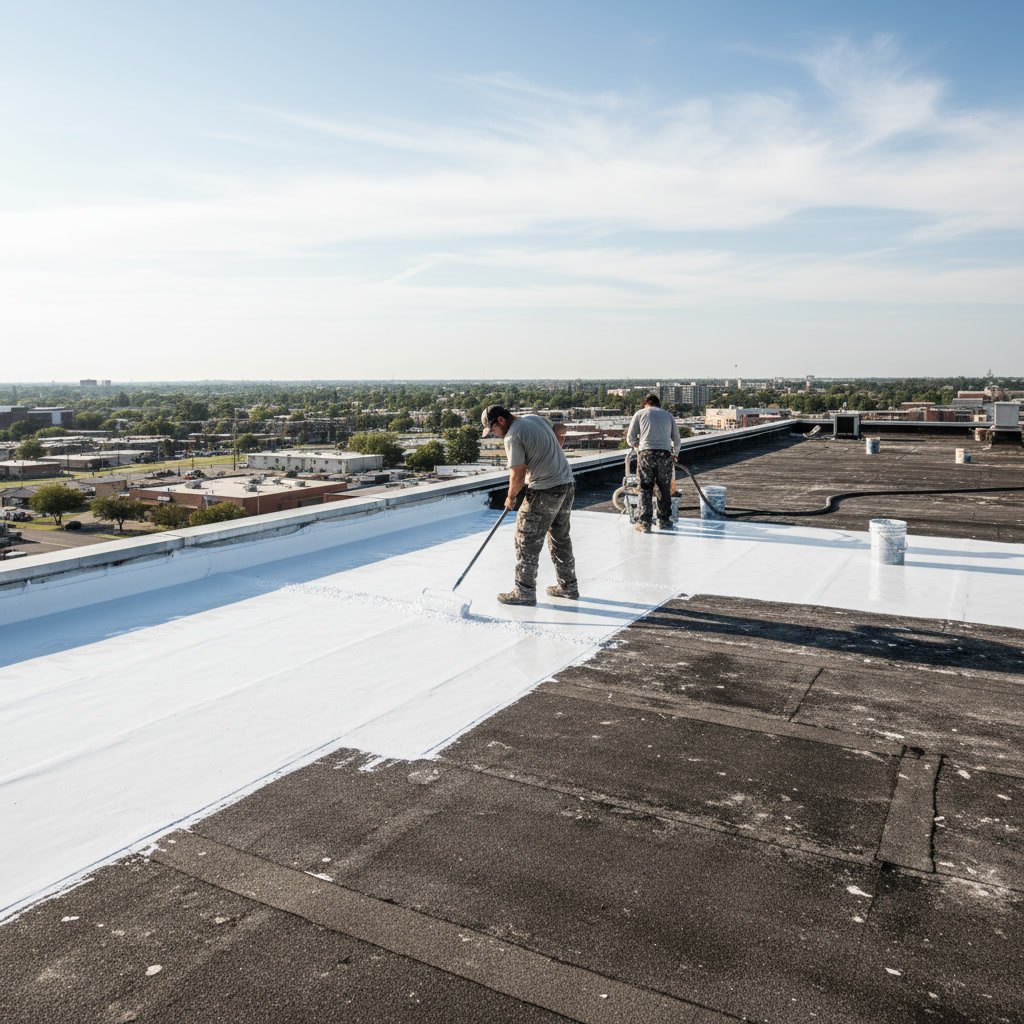
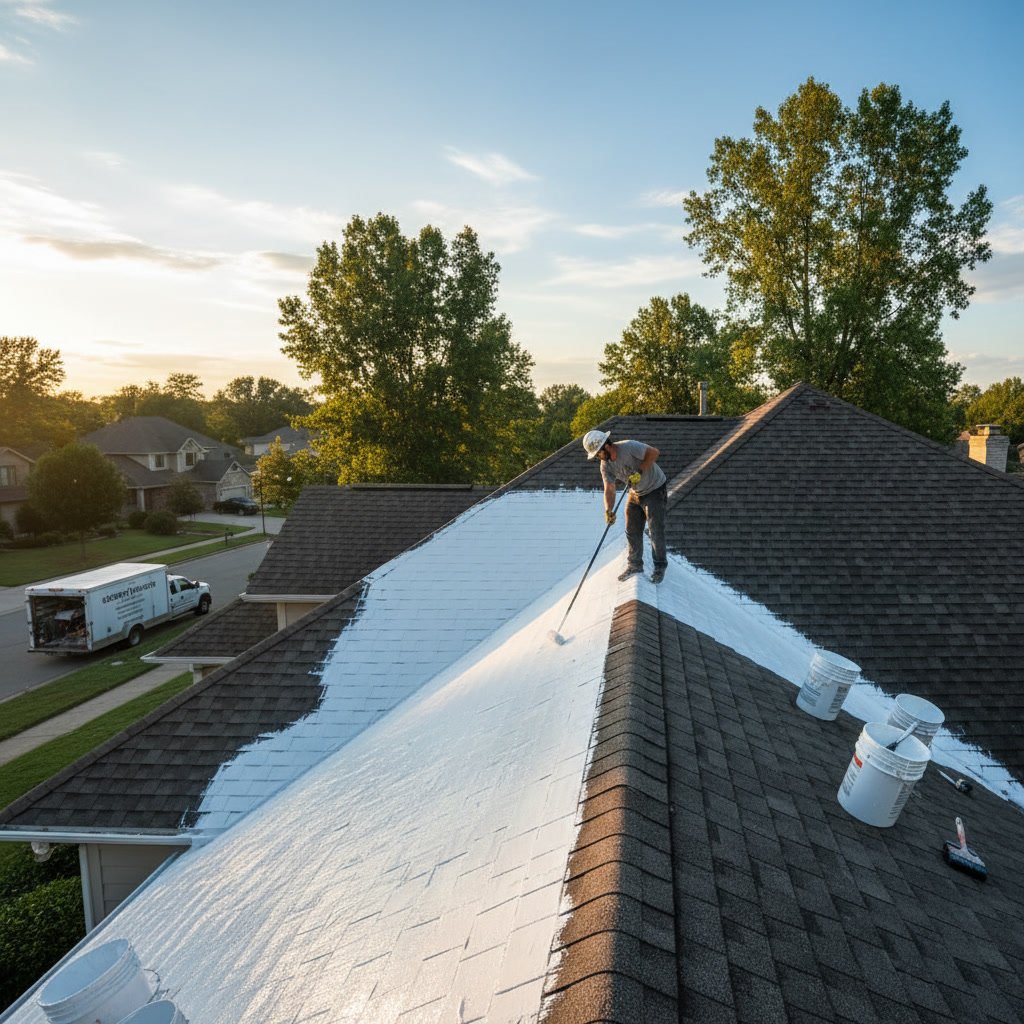
Roof coatings are liquid-applied membranes that cure to form a seamless, protective layer over your existing roof surface. Think of them as a specialized paint designed specifically for roofing materials, engineered to withstand extreme weather, reflect UV rays, and seal minor imperfections.
Unlike traditional paint, these coatings contain specialized polymers and resins that remain flexible after curing. This flexibility allows the coating to expand and contract with temperature changes without cracking or peeling. Most coatings range from 10 to 40 mils thick when dry, roughly the thickness of a few sheets of paper to a credit card.
Professional roofers typically apply these coatings using spray equipment, rollers, or brushes depending on the product and roof type. The coating bonds directly to cleaned and prepared roof surfaces, creating a monolithic barrier against moisture, UV radiation, and thermal stress.
Types of Roof Coatings Available
Different coating formulations work best for specific roofing materials and climate conditions. Choosing the right type matters significantly for performance and longevity.
Acrylic Roof Coatings
Acrylic coatings use water-based polymers and offer excellent UV resistance and reflectivity. They work well on metal, single-ply membranes, and modified bitumen roofs. These coatings typically cost between $0.50 and $1.50 per square foot installed.
The main advantage of acrylics is their high solar reflectance, which can reduce roof surface temperatures by 50 to 80 degrees Fahrenheit. They resist dirt accumulation and maintain their reflective properties longer than many alternatives. However, they perform best in dry climates and can be vulnerable to ponding water.
Silicone Roof Coatings
Silicone coatings excel in areas with frequent rain or standing water. They repel moisture exceptionally well and won’t break down when exposed to ponding water for extended periods. Installation costs typically range from $1.50 to $3.00 per square foot.
These coatings maintain flexibility across wide temperature ranges and resist mildew growth. The tradeoff is that silicone coatings attract and hold dirt more readily than acrylics, which can reduce their reflective properties over time. They’re particularly popular for flat and low-slope commercial roofs in humid climates.
Polyurethane Roof Coatings
Polyurethane coatings come in two varieties: aromatic and aliphatic. Aromatic formulations offer superior impact resistance and durability for high-traffic roofs. Aliphatic versions provide better UV stability and color retention. Both types typically cost $2.00 to $4.00 per square foot installed.
These coatings work exceptionally well as base coats under other coating types or as standalone systems where foot traffic is a concern. They’re often used on roofs with HVAC equipment or other reasons for regular access.
Asphalt-Based Coatings
Asphalt emulsion coatings are the most economical option, usually costing $0.40 to $1.00 per square foot. They work specifically with asphalt-based roofing materials like built-up roofs and modified bitumen systems.
While budget-friendly, these coatings don’t reflect heat as effectively as lighter-colored alternatives. They’re best suited for extending the life of aging asphalt roofs when reflectivity isn’t the primary concern.
How Roof Coatings Extend Roof Lifespan
The lifespan extension that roof coatings provide isn’t marketing hype. The mechanisms are straightforward and measurable.
First, coatings seal micro-cracks and minor imperfections before they develop into full leaks. A roof membrane or metal panel might have dozens of tiny vulnerabilities invisible to the naked eye. The coating fills these gaps and creates a continuous waterproof barrier.
Second, quality coatings dramatically reduce thermal cycling stress. Uncoated dark roofs can reach 160 to 180 degrees Fahrenheit on summer days in San Antonio and surrounding areas like New Braunfels or Schertz. Reflective coatings can keep surface temperatures 50 to 80 degrees cooler. This reduction minimizes expansion and contraction cycles that fatigue roofing materials over time.
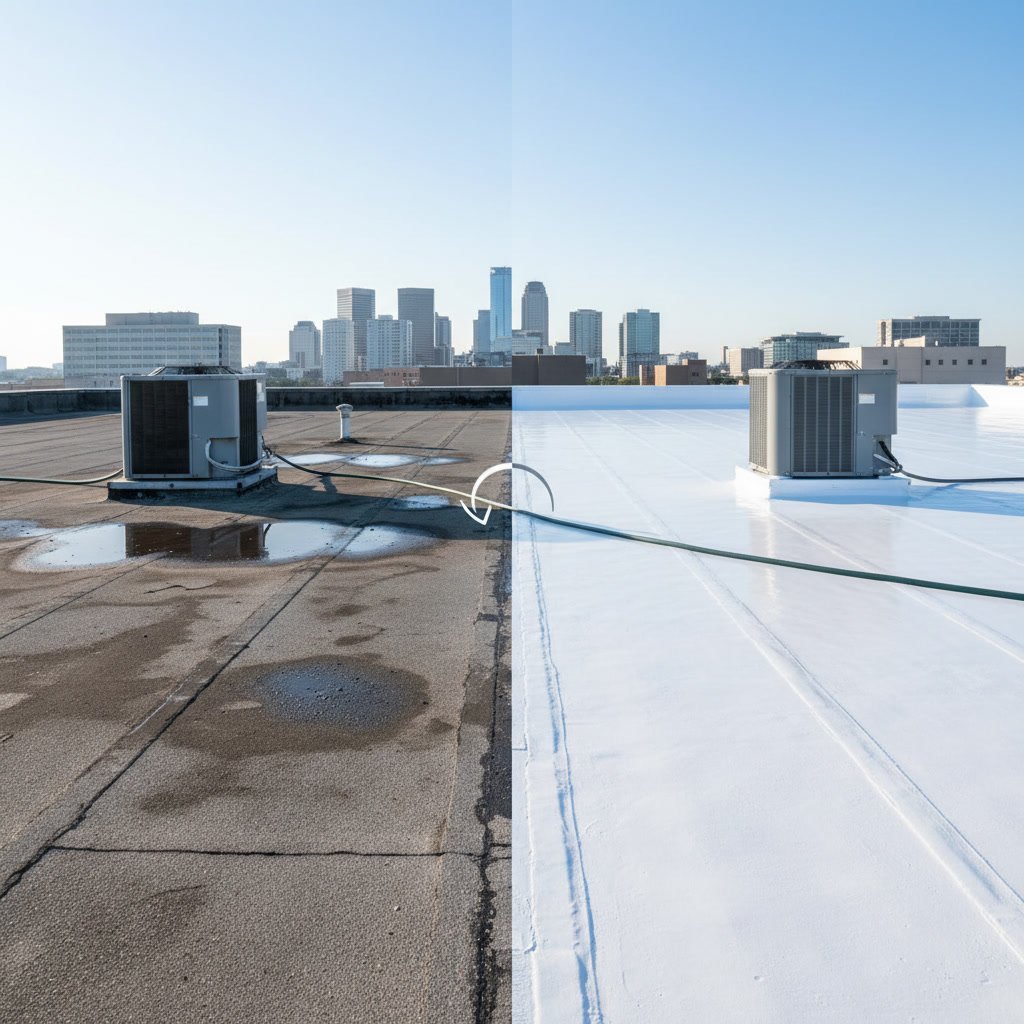
Third, UV radiation breaks down roofing materials at the molecular level. Coatings act as sunscreen for your roof, absorbing or reflecting UV rays before they degrade the underlying substrate. This protection is particularly valuable for asphalt shingles and single-ply membranes, which are especially vulnerable to UV damage.
Studies from the Cool Roof Rating Council show that properly applied and maintained coatings can extend roof life by 10 to 25 years depending on the substrate condition at application time and the coating type selected. A 20-year-old commercial roof nearing the end of its expected life might function effectively for another 10 to 15 years with the right coating system.
Pro Tip: Coatings work best when applied before serious deterioration occurs. If your roof has active leaks, significant membrane damage, or widespread rust perforation, coating may only be a temporary fix. Consider a professional inspection from roofing services specialists to determine if your roof is a good coating candidate.
Energy Savings and Cost Benefits
The energy savings from reflective roof coatings provide ongoing financial benefits that compound over time. Buildings with coated roofs typically see cooling cost reductions of 10 to 30 percent during summer months.
The Department of Energy reports that for every degree you reduce air conditioning demand, energy costs drop by approximately three percent. A coating that lowers roof surface temperature by 50 degrees doesn’t translate to a 50-degree interior reduction, but even a five to ten-degree decrease in attic temperature substantially reduces HVAC workload.
For a typical 2,000-square-foot home in the San Antonio area spending $200 monthly on summer cooling, a 15 percent reduction saves $30 per month or $360 annually. Over a 15-year coating lifespan, that’s $5,400 in energy savings. Factor in the cost deferral of roof replacement, which for metal roofing systems might run $15,000 to $25,000, and the return on a $3,000 to $6,000 coating investment becomes clear.
Commercial buildings see even more dramatic savings due to larger roof areas and higher cooling loads. A 10,000-square-foot retail building might save $2,000 to $4,000 annually in reduced HVAC costs.
Best Candidates for Roof Coating
Not every roof benefits equally from coating. The ideal candidates share specific characteristics that maximize coating performance and value.
Flat and low-slope roofs with less than a 3:12 pitch are prime coating candidates. These roofs experience more UV exposure and heat absorption than steep-slope roofs. Metal roofs, single-ply membranes like TPO and EPDM, modified bitumen, and built-up roofs all respond well to coating when in good structural condition.
The roof should have at least 50 percent of its expected lifespan remaining. Coating a five-year-old roof expected to last 25 years makes excellent sense. Coating a 22-year-old roof with visible deterioration is usually throwing good money after bad.
Look for these green lights indicating your roof is a good coating candidate: the structure shows no sagging or water damage, the existing membrane or panels are intact without widespread damage, there are no active leaks or only minor, localized leak issues, and fasteners and seams remain secure.
Red flags suggesting coating isn’t appropriate include: standing water that remains more than 48 hours after rain, extensive rust perforation on metal roofs, widespread membrane splitting or delamination, saturated insulation underneath the roof deck, and structural damage or rot in decking or support members.
When structural issues exist, roof replacement and installation typically provides better long-term value than coating. A professional assessment helps determine which path makes the most financial and practical sense.
Application Process and What to Expect
Proper application makes the difference between a coating that performs for 15 years and one that fails within three. The process involves several critical steps that cannot be rushed or skipped.
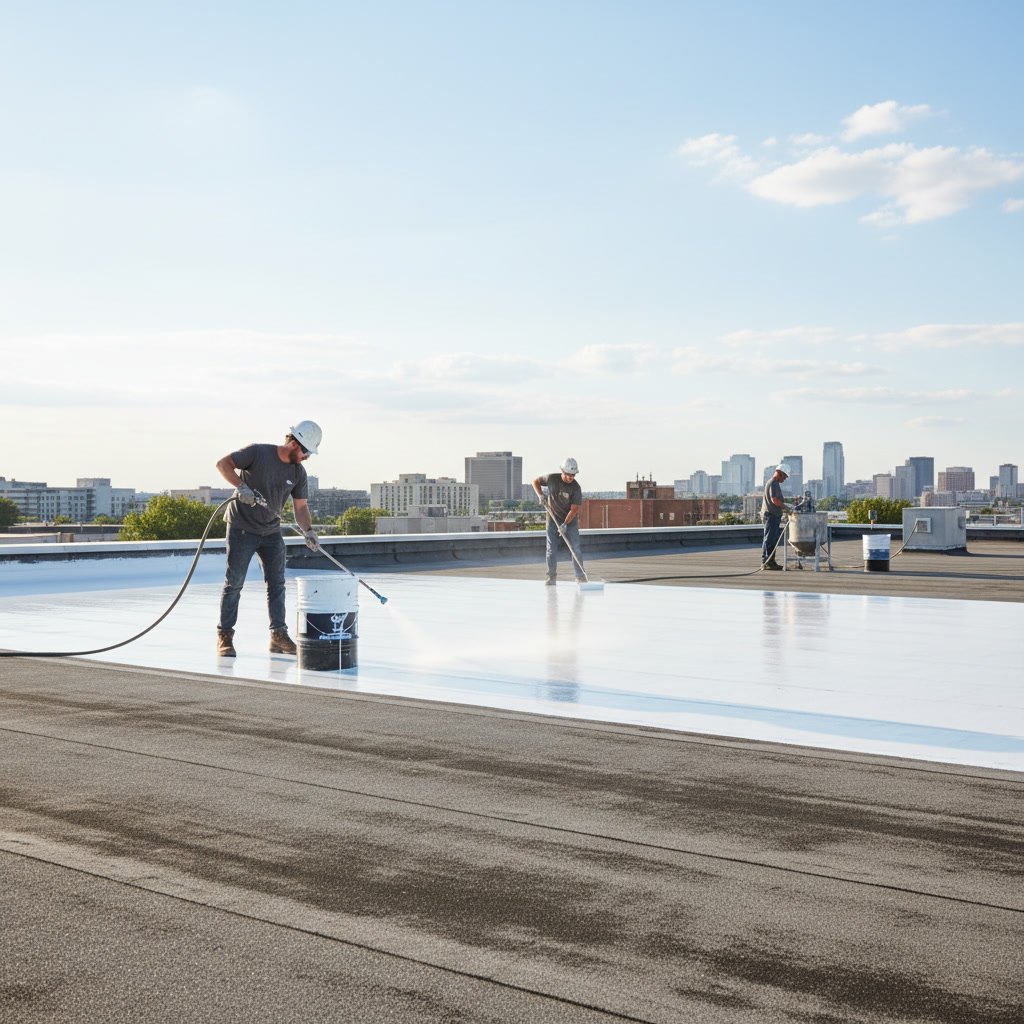
Surface preparation accounts for roughly 40 percent of labor time but determines 80 percent of coating success. Contractors must remove all dirt, debris, biological growth, and loose material. Pressure washing is standard, often followed by chemical cleaners for stubborn contaminants. The surface must be completely dry before coating application begins.
Repairs come next. Any damaged areas, failed seams, or problem fasteners get addressed before coating. This might involve patching membrane tears, replacing rusted fasteners on metal panels, or resealing problem seams. Some contractors apply reinforcing fabric over seams and transitions for added durability.
Primer application may be required depending on the substrate and coating type. Primers improve adhesion and ensure the coating bonds properly to the existing roof material. Not all coating systems require primer, but when specified, skipping this step leads to premature failure.
The coating itself typically goes on in two coats applied at manufacturer-specified rates. The first coat provides baseline coverage and adhesion. After proper cure time, usually 24 to 48 hours, the second coat adds thickness and ensures complete coverage. Total dry film thickness typically ranges from 20 to 40 mils depending on the product and warranty requirements.
Weather plays a crucial role in application timing. Most coatings require temperatures above 50 degrees Fahrenheit and no rain in the forecast for 24 to 48 hours. High humidity can extend cure times. Professional contractors in the San Antonio region typically schedule coating projects during the mild spring and fall months when conditions are most favorable.
The entire process for a residential roof takes two to four days including prep, repairs, and coating application. Commercial projects span one to three weeks depending on size and complexity.
Maintenance and Longevity
Even the best coating won’t last without periodic maintenance. The good news is that maintaining a coated roof requires far less effort and expense than maintaining an uncoated one.
Annual inspections help catch small issues before they become major problems. Look for areas where the coating might be wearing thin, typically around roof penetrations, edges, and high-traffic zones. Check for debris accumulation, especially leaves and branches that hold moisture against the coating surface.
Cleaning the roof once or twice yearly maintains reflectivity and prevents biological growth. A simple pressure wash with mild detergent removes most contaminants. Avoid harsh chemicals or abrasive cleaning methods that might damage the coating.
Most coatings need a maintenance recoat every 10 to 15 years. This isn’t a full reapplication but rather a single refresher coat over cleaned and lightly abraded surfaces. The maintenance coat costs 30 to 50 percent less than the initial application and extends protection for another decade.
With proper maintenance, many coating systems protect roofs for 20 to 30 years total, including one or two maintenance recoats during that period. This represents exceptional value compared to full roof replacement cycles.
Key Takeaway: The total cost of ownership for a coated roof is typically 40 to 60 percent lower than repeated replacements over the same timeframe. Factor in energy savings and reduced roof repairs, and coating systems deliver strong returns on investment for qualifying roofs.
Common Misconceptions About Roof Coatings
Several myths about roof coatings persist despite evidence to the contrary. Clearing up these misconceptions helps property owners make informed decisions.
The first misconception is that coatings fix all roof problems. Coatings seal minor imperfections and prevent future damage, but they don’t repair structural issues, replace saturated insulation, or correct improper drainage. They’re a preservation tool, not a miracle cure for failing roofs.
Another myth suggests all coatings are essentially the same. As discussed earlier, acrylic, silicone, polyurethane, and asphalt formulations have distinct properties suited to different applications. Using the wrong coating type for your roof substrate or climate conditions leads to poor performance regardless of application quality.
Some believe coatings void roof warranties. While true for some manufacturers, many now recognize coatings as acceptable maintenance when properly applied. Always check your warranty terms and consult your roofing contractor before coating a roof still under manufacturer warranty.
The idea that coatings eliminate maintenance is also false. Coated roofs require less maintenance than uncoated ones, but they’re not maintenance-free. Regular inspections and cleaning remain important for maximum lifespan.
Finally, some think any handyman can apply roof coatings successfully. While the materials themselves aren’t particularly complex, proper surface preparation, weather timing, and application technique require experience and specialized equipment. DIY coating jobs frequently fail within a few years due to inadequate prep work or improper application rates.
Frequently Asked Questions
How long do roof coatings typically last?
Quality roof coatings last 10 to 20 years before requiring a maintenance recoat, depending on the coating type, climate conditions, and maintenance quality. Silicone coatings often last 15 to 20 years, while acrylics typically need refreshing after 10 to 15 years. With proper maintenance recoating, the total protective lifespan can exceed 30 years.
Can you apply roof coating over shingles?
Most coating manufacturers don’t recommend applying coatings over traditional asphalt shingles. The granular surface doesn’t provide adequate adhesion, and coatings can trap moisture underneath, accelerating deterioration. Coatings work best on smooth surfaces like metal panels, single-ply membranes, and built-up roofing systems. If you have roof shingles, other maintenance or replacement options usually make more sense.
Will roof coating stop an active leak?
Roof coatings can seal minor leaks if the source is surface-level cracking or small membrane punctures. However, if the leak stems from failed flashing, structural damage, or saturated insulation, coating alone won’t solve the problem. The underlying issue must be repaired first, then coating applied to prevent future problems. A thorough inspection identifies whether coating will address your specific leak or if more extensive repairs are needed.
How much do professional roof coating services cost?
Professional roof coating costs range from $1.50 to $4.00 per square foot installed, depending on coating type, roof condition, and necessary repairs. A typical 2,000-square-foot residential roof costs $3,000 to $8,000 including preparation, repairs, and coating. Commercial projects cost less per square foot due to economies of scale. This represents 25 to 40 percent of the cost of full roof replacement, making coating an attractive option when the existing roof structure remains sound.
Do roof coatings work in all climates?
Different coating formulations perform better in specific climates. Acrylic coatings excel in hot, dry climates with intense sun exposure, making them ideal for most of Texas including areas like Boerne and Seguin. Silicone coatings work better in humid or rainy regions where water resistance is critical. Polyurethane options provide flexibility for temperature extremes. A knowledgeable contractor matches the coating chemistry to your local climate conditions for optimal performance.
Making the Right Choice for Your Roof
Roof coatings deliver measurable benefits when applied to the right roof at the right time. They extend lifespan, reduce energy costs, improve waterproofing, and cost substantially less than replacement. The key is honest assessment of your roof’s current condition and selecting the appropriate coating system for your specific situation.
If your roof shows minor aging but remains structurally sound, coating often provides the best return on investment. If significant damage exists or your roof has exhausted most of its design life, replacement makes more financial sense in the long run.
Sky Metal Roofing LLC provides expert roof coating services throughout San Antonio and surrounding communities. Our experienced team assesses your roof’s condition, recommends the optimal coating system for your specific situation, and applies it according to manufacturer specifications for maximum performance and longevity. Whether you need coating evaluation, application, or ongoing maintenance, we deliver professional results backed by our commitment to quality workmanship. Call us at +12104120026 to schedule a no-obligation roof assessment and learn whether coating is the right solution for your property.