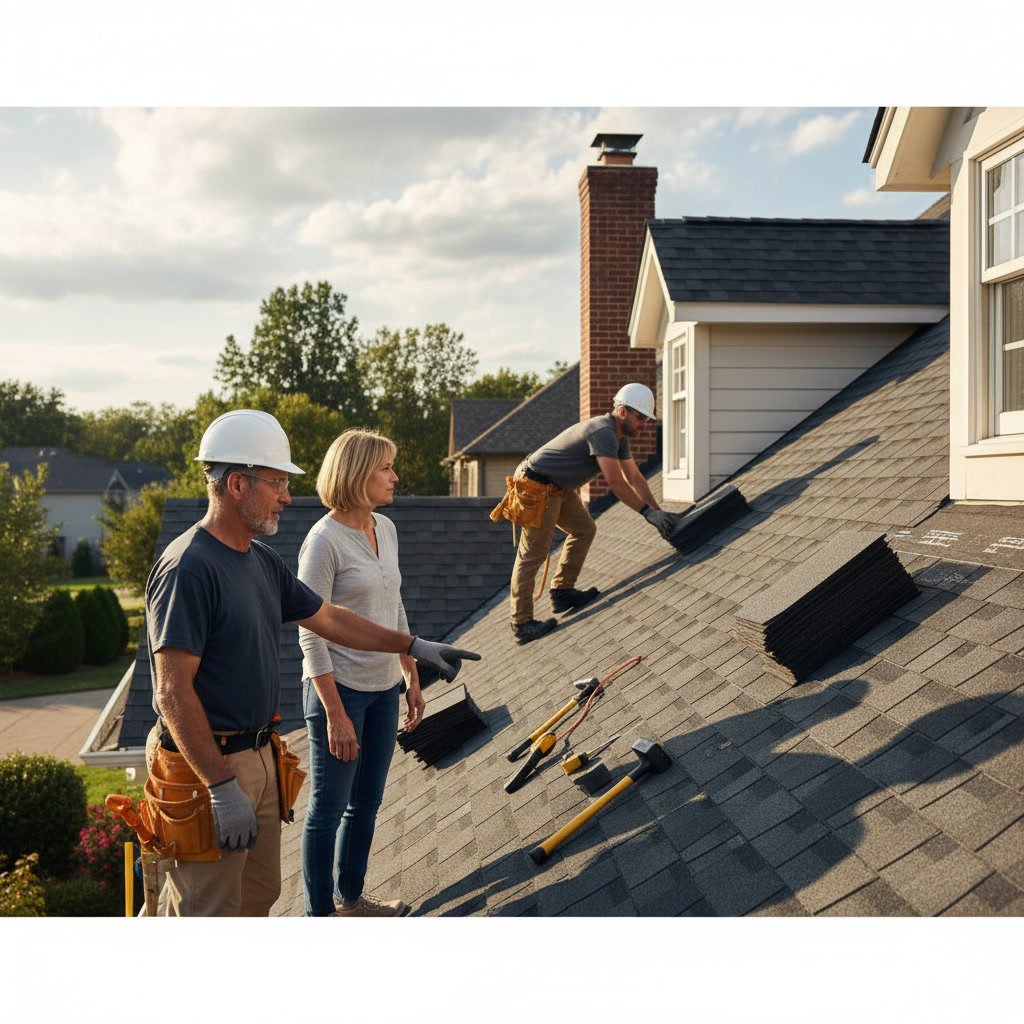
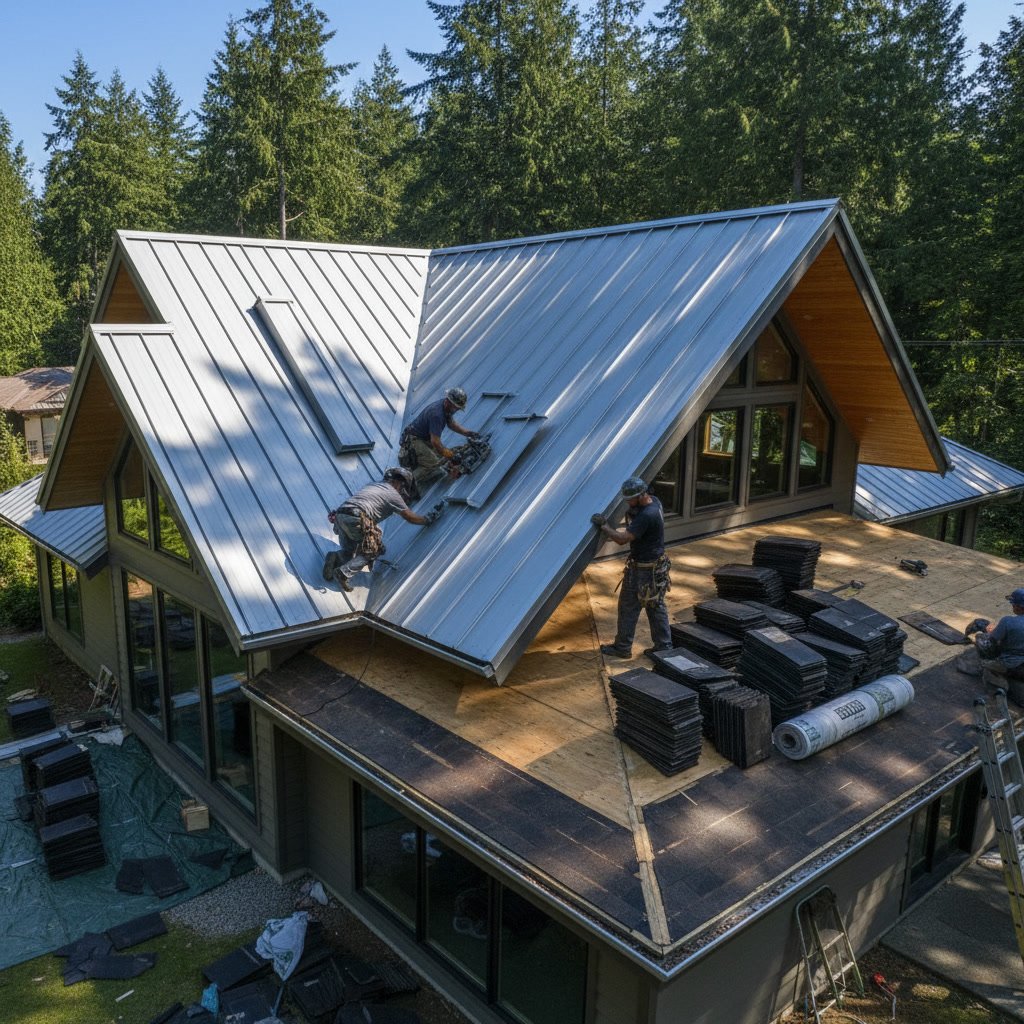
Metal roofing installation requires a fundamentally different approach than traditional shingle roofs, from substrate preparation to fastening techniques. While shingle roofs rely on overlapping layers secured with nails, metal roofs use interlocking panels fastened to purlins or solid decking with concealed clips. The structural demands, labor expertise, and installation timeline all vary significantly between these two roofing systems.
Why Installation Methods Matter for Your Roof’s Performance
The way a roof is installed directly impacts its lifespan, weather resistance, and energy efficiency. A metal roof installed incorrectly can develop leaks at the seams, while a shingle roof with improper nail placement may blow off in high winds. Each roofing material has evolved specific installation protocols based on how it expands, contracts, and sheds water.
Professional roofers train for years to master the nuances of different materials. The skills required to install standing seam metal panels differ dramatically from those needed to lay asphalt shingles. This specialization explains why some contractors focus exclusively on one material type.
Structural Preparation and Decking Requirements
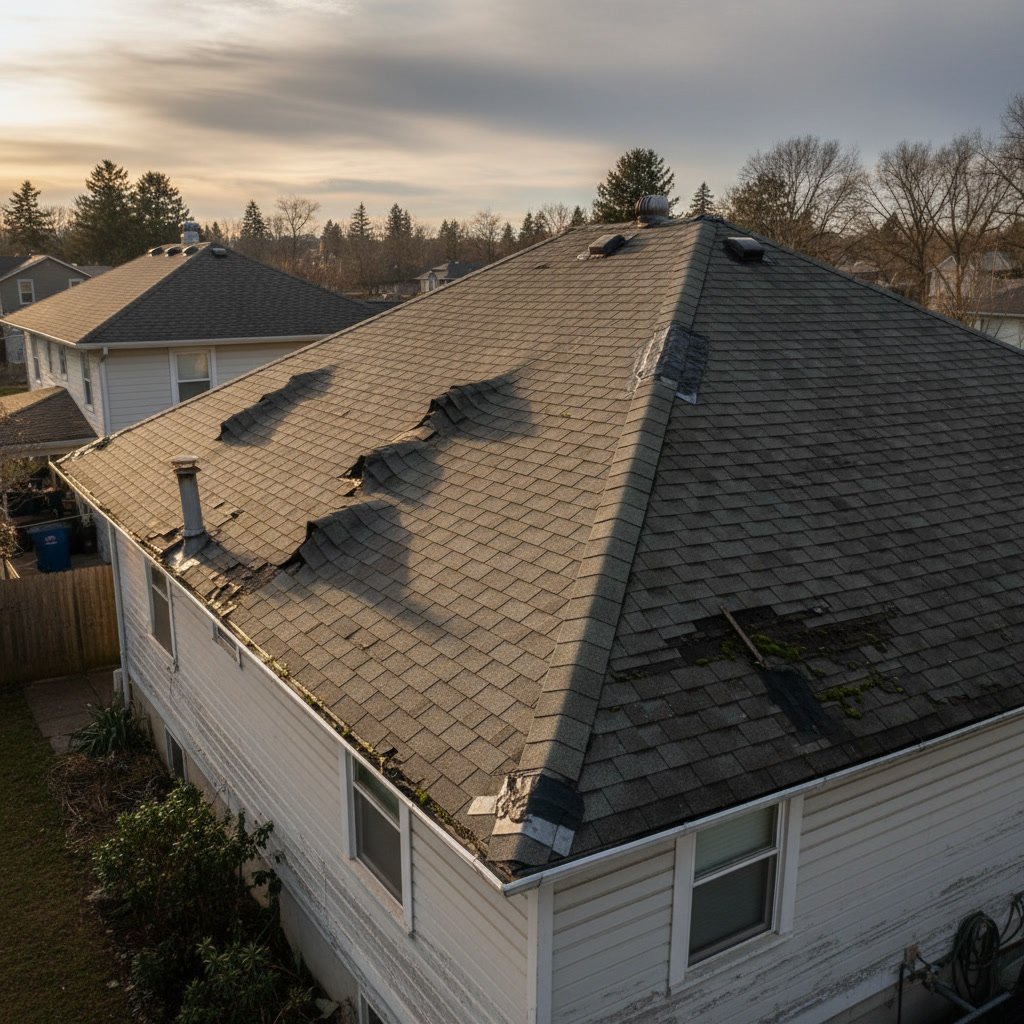
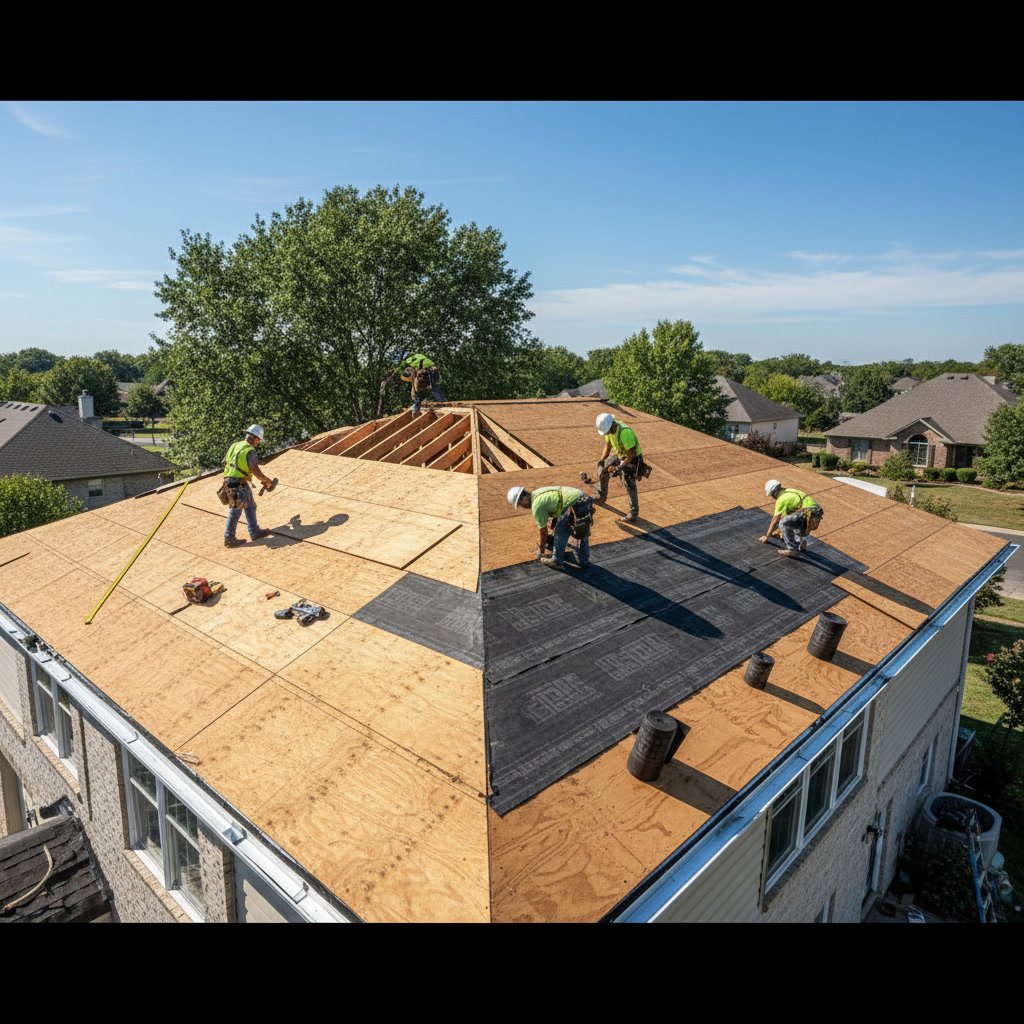
Traditional shingle roofs typically require solid plywood or OSB decking across the entire roof surface. The shingles attach directly to this substrate with roofing nails, and the decking must be smooth and continuous to prevent irregularities from telegraphing through the shingles.
Metal roofs offer more flexibility in substrate preparation. Standing seam systems can be installed over purlins spaced 24 inches apart, eliminating the need for solid decking in some applications. This approach reduces material costs and speeds up installation. However, many residential metal roofs still use solid decking to support foot traffic during maintenance and to provide additional insulation value when paired with attic insulation systems.
The decking must be perfectly dry before metal panel installation. Unlike shingles, which allow some moisture vapor transmission, metal roofs can trap moisture against the substrate if installed prematurely, leading to rot and mold.
Underlayment and Moisture Barrier Differences
Shingle roofs traditionally use felt paper or synthetic underlayment as a secondary water barrier. This layer provides temporary protection during installation and serves as a backup if shingles fail. Standard 30-pound felt has been the industry norm for decades, though synthetic products now dominate the market.
Metal roof systems require high-temperature underlayment rated for the increased surface heat that metal generates. Standard felt paper can deteriorate under metal panels that reach 150 to 180 degrees Fahrenheit in summer sun. Professional installers use synthetic underlayments with higher temperature ratings and superior tear resistance.
Some metal roof systems also incorporate slip sheets, specialized underlayments with a slick surface that allow the metal panels to move freely as they expand and contract. This movement accommodation prevents the fastening system from binding or the panels from buckling.
Fastening Systems and Thermal Movement Considerations
The most significant difference between these installation methods involves how the roofing material attaches to the structure. Shingle roofs use exposed fasteners, typically four to six nails per shingle, driven through the material into the decking. The overlapping pattern covers most nail heads, though the fasteners remain part of the weatherproofing system.
Standing seam metal roofs use concealed clip systems that allow the panels to expand and contract with temperature changes. A 40-foot metal panel can expand more than half an inch between winter and summer temperatures. The clips slide along the panel seams, accommodating this movement without creating stress points that could cause leaks or panel distortion.
Screw-down metal roofing, a more economical option, uses exposed fasteners with neoprene washers. These systems require precise fastener placement and torque to prevent over-tightening, which can compress the washer and create future leak points as the washer degrades. This installation style more closely resembles shingle application but demands careful attention to thermal movement at panel edges.
Installation Timeline and Weather Constraints in New Braunfels
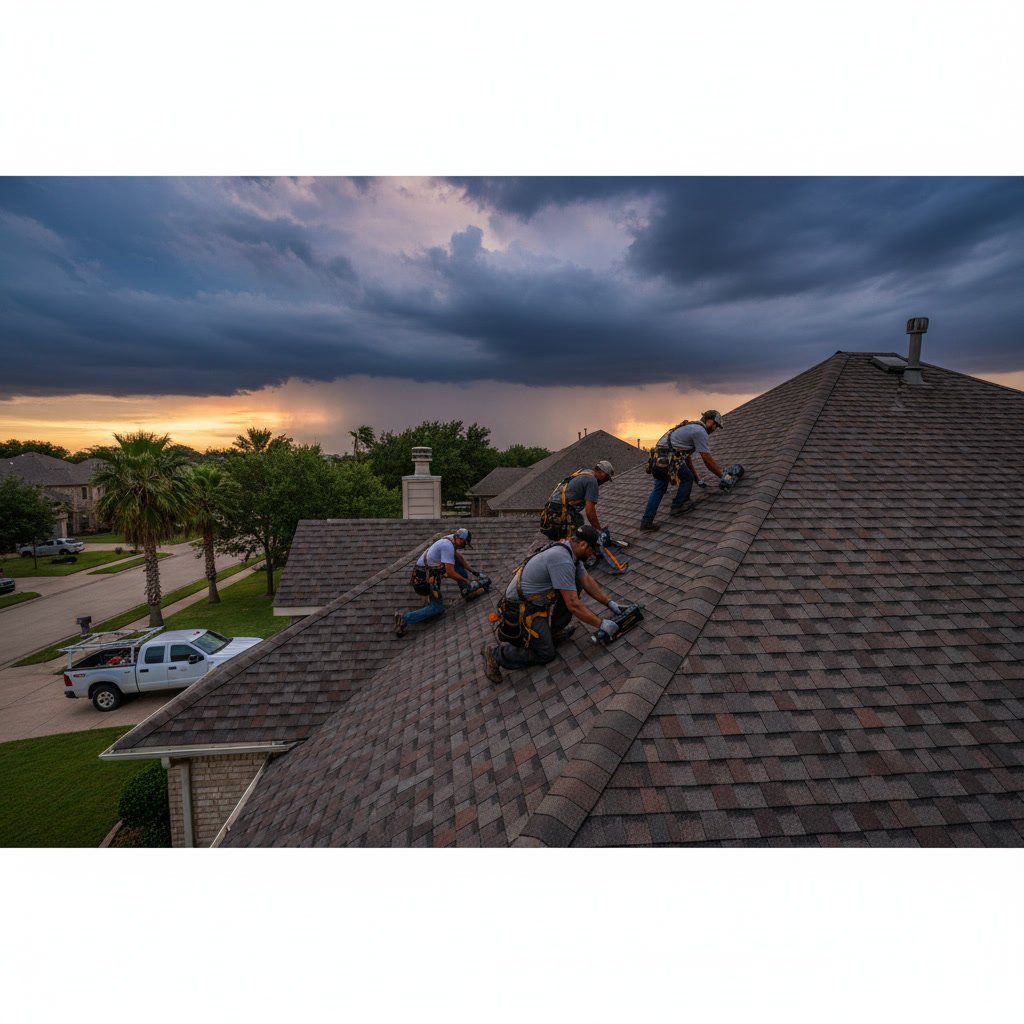
A typical shingle roof installation on a 2,000 square foot home takes one to three days with a full crew. The lightweight materials allow quick handling, and the installation process can tolerate brief weather interruptions. If rain threatens, crews can complete one section at a time, maintaining water protection.
Metal panel installation generally requires more time for the same roof area. Panels must be measured precisely, cut on-site for custom lengths, and carefully aligned during installation. A comparable metal roof project might take three to five days. However, once panels are secured, they provide immediate, complete weather protection without the curing time that some shingle adhesives require.
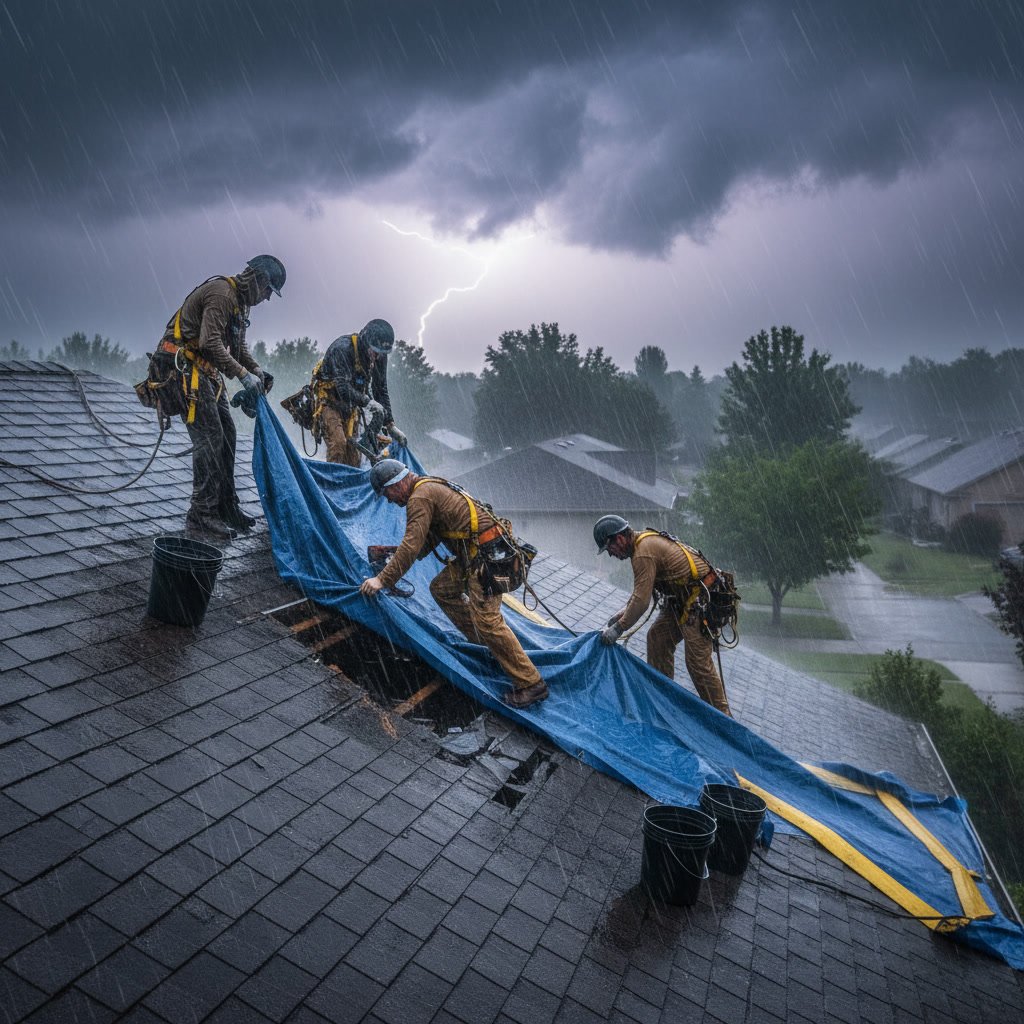
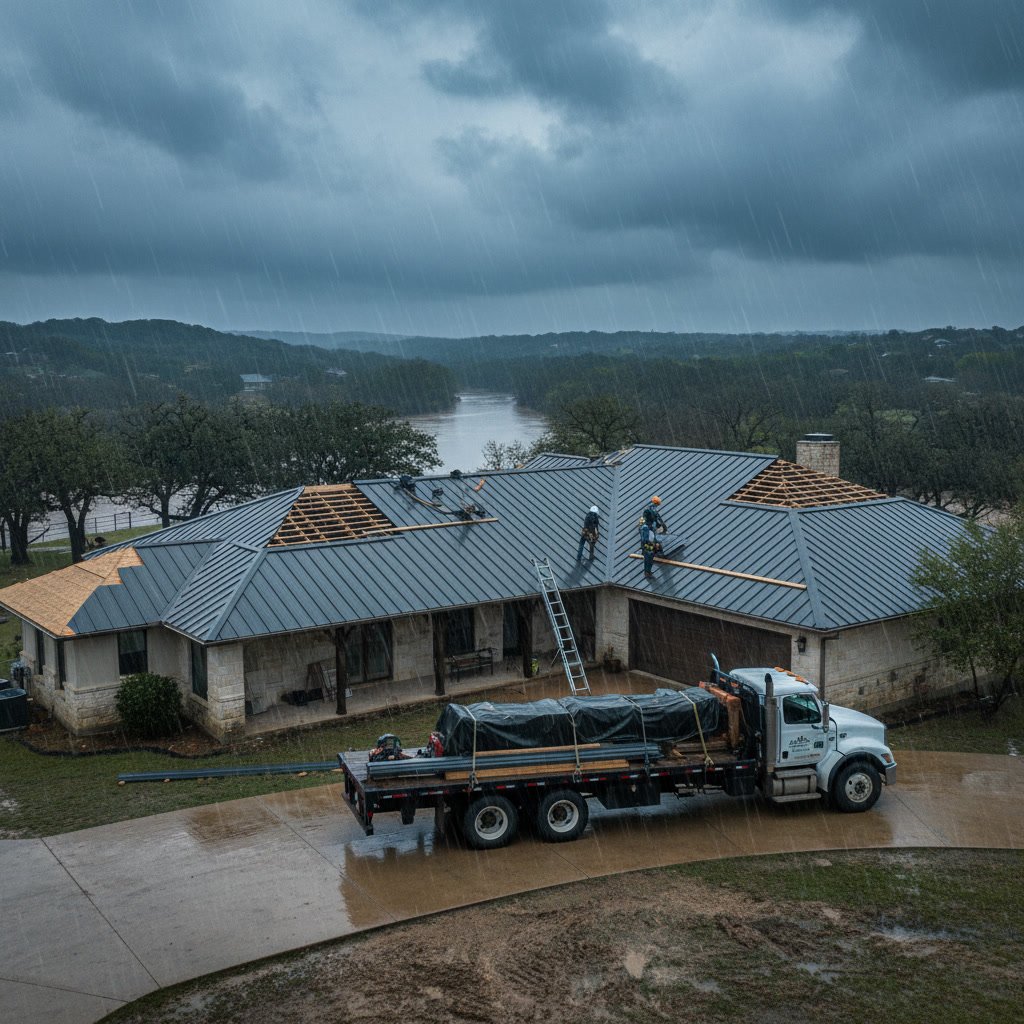
Wind presents different challenges for each material. Shingle installation should halt in winds above 40 mph, as loose shingles can become airborne hazards. Metal panels, being larger and heavier, become difficult to handle safely in winds above 20 to 25 mph. The large surface area acts as a sail, making precise placement dangerous for installers.
Flashing and Penetration Details
Both roof types require careful flashing around chimneys, vents, skylights, and valleys, but the techniques differ substantially. Shingle roofs use step flashing integrated into the shingle courses, with each piece overlapping the one below. Valley flashing typically involves either woven shingles or a metal channel over which shingles are cut and sealed.
Metal roofs require custom-fabricated flashing that matches the panel profile and accommodates thermal movement. Penetrations like skylight maintenance points need special boots or curbs that allow the metal panels to slide past the fixed penetration. Valley flashing on metal roofs often uses a separate valley pan installed before the field panels, with the panels trimmed to overlap the valley edges.
Ridge caps also differ between systems. Shingle ridge caps are simply shorter pieces folded over the peak and nailed in place. Metal ridge caps must account for thermal expansion and typically use concealed fastening that matches the field panel system, with ventilation channels incorporated for proper attic airflow.
Tools and Equipment Required for Each Installation Type
Shingle installation requires relatively basic tools: hammer or pneumatic nailer, utility knife, chalk line, tape measure, and safety equipment. Most roofing crews already own these tools, and the total equipment investment for shingle work is modest. Tear-off requires additional tools like roofing shovels and dumpster access, but the installation phase itself is straightforward.
Metal roof installation demands specialized equipment that represents significant capital investment. Panel brake machines for on-site custom bending, metal shears for precise cuts, seaming tools for standing seam systems, and specialized fastening equipment all contribute to higher overhead costs. A quality standing seam seaming tool alone can cost several thousand dollars.
This equipment investment explains part of the cost difference homeowners encounter when comparing bids. Specialized roof services require specialized tools, and contractors must recoup those costs through their pricing structure. Understanding the metal roofing cost factors helps homeowners evaluate quotes appropriately.
Comparing Installation Complexity Step by Step
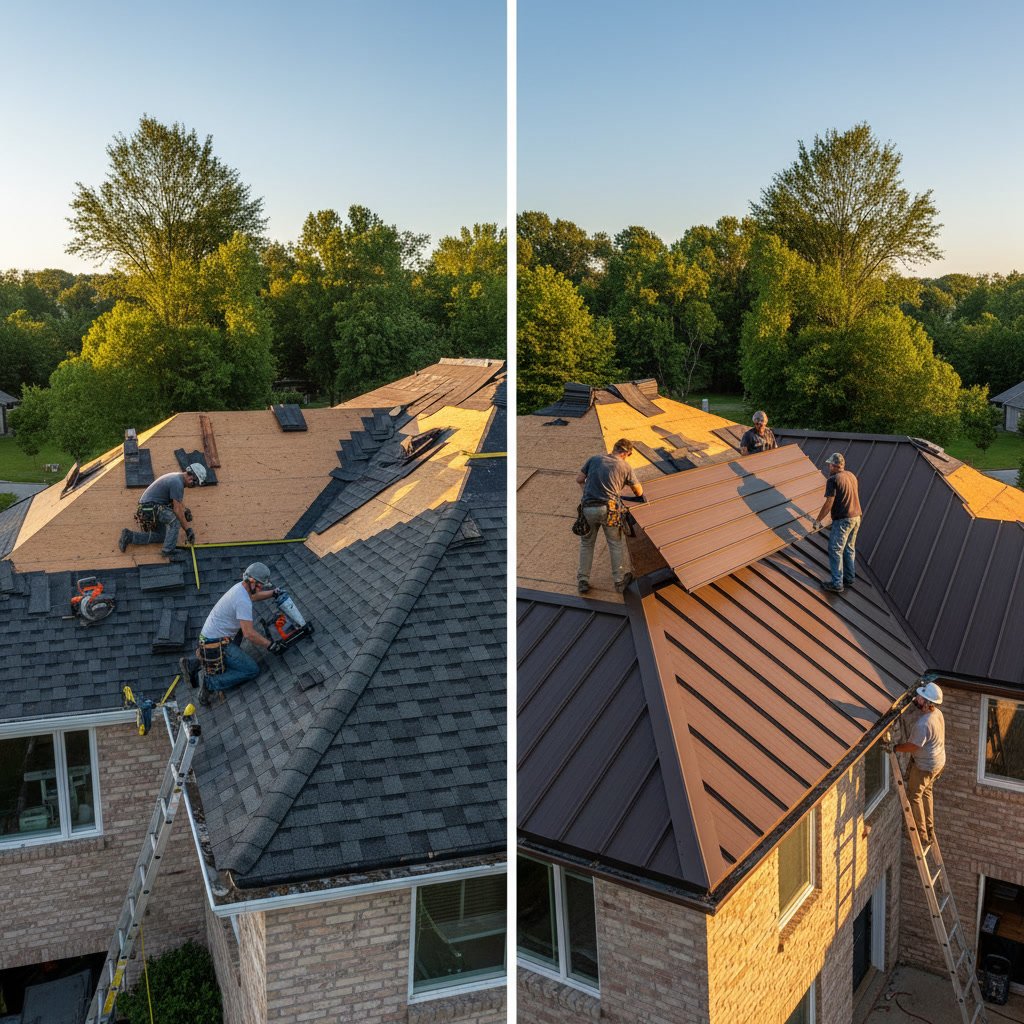
For traditional shingle installation, the process follows this general sequence: tear-off old roofing, inspect and repair decking, install underlayment, apply drip edge, install starter strips, lay shingle courses from bottom to top, install ridge vents and caps, and complete flashing details.
Metal roof installation follows a more complex path: tear-off if needed, inspect structural capacity for metal weight, install high-temp underlayment, install eave trim and drip edge, position and secure first panel ensuring perfect alignment, install clips or fasteners per manufacturer specifications, interlock subsequent panels with precise spacing, custom-fabricate and install all flashing components, and complete ridge cap with proper ventilation.
The precision required at each step differs significantly. A shingle misaligned by a quarter inch disappears into the overall pattern. A metal panel off by the same amount creates cumulative error that becomes visually obvious and can compromise weather-tightness by the time installers reach the opposite rake edge.
Expertise and Certification Requirements
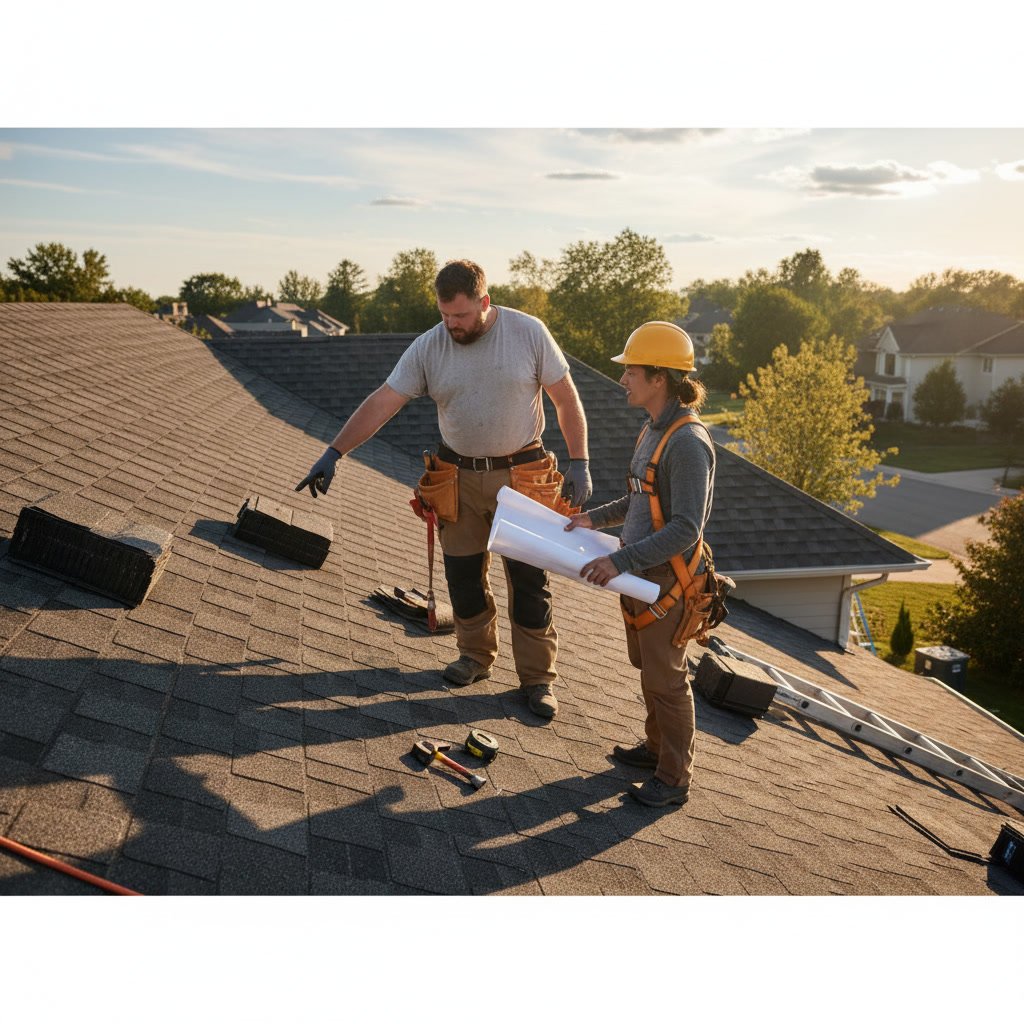
Most roofing contractors can competently install asphalt shingles after a few months of training and supervised experience. The techniques are well-established, and the margin for error is relatively forgiving. Manufacturer certifications for shingle installation are available but not always required for basic work.
Metal roof installation, particularly standing seam systems, requires extensive training and often manufacturer certification. Each metal roofing brand has specific installation requirements, and deviation from these protocols voids warranties. Contractors must understand thermal dynamics, proper fastener spacing for local wind loads, and the physics of panel expansion.
Sky Metal Roofing LLC maintains manufacturer certifications for the metal systems we install, ensuring that every project meets warranty requirements and performance standards. This expertise level separates qualified metal roof contractors from general roofers who occasionally attempt metal installations without proper training.
Impact on Roof Replacement Timelines and Disruption
The installation method affects how long your home remains vulnerable during the project. Shingle tear-off and replacement can often be completed in a single long day for smaller homes, minimizing the time your structure is exposed to weather risk. The relatively quiet installation process causes minimal disruption to household routines.
Metal roof projects typically span multiple days, creating a longer window during which your home is in transition. However, the noise profile differs. While shingle installation involves constant hammering or nail gun operation, metal installation includes periodic loud bangs when panels are seamed together or when cuts are made with metal shears. Homeowners sensitive to noise should plan accordingly.
The longer timeline for metal installation also means more days of contractor presence on your property. Clear communication about daily schedules, workspace needs, and material staging areas helps minimize inconvenience during the extended project period.
Why the Right Installation Method Protects Your Investment
Both shingles and metal roofing can provide decades of reliable service when installed correctly. The key difference lies in how unforgiving each material is to installation errors. Shingle roofs tolerate minor imperfections due to their layered, flexible nature. Metal roofs amplify small mistakes into visible defects or performance failures.
This difference underscores the importance of selecting a contractor with specific expertise in your chosen material. A company that excels at shingle work may not have the precision and equipment for quality metal installation. The decision involves not just comparing materials but also ensuring your contractor has mastered the installation method required.
Understanding these installation differences helps you set realistic expectations for project timelines, costs, and contractor qualifications. The right material installed with the proper method delivers the performance, appearance, and longevity you expect from a major roofing investment.
If you’re considering metal roofing for your property and want to understand how the installation process will unfold for your specific situation, Sky Metal Roofing LLC brings the specialized expertise and certified installation practices that ensure long-term performance. Our team serves homeowners throughout the region with the precision and attention to detail that metal roofing demands. Call +12104120026 to discuss your roofing project and learn how proper installation methods protect your investment for decades to come.