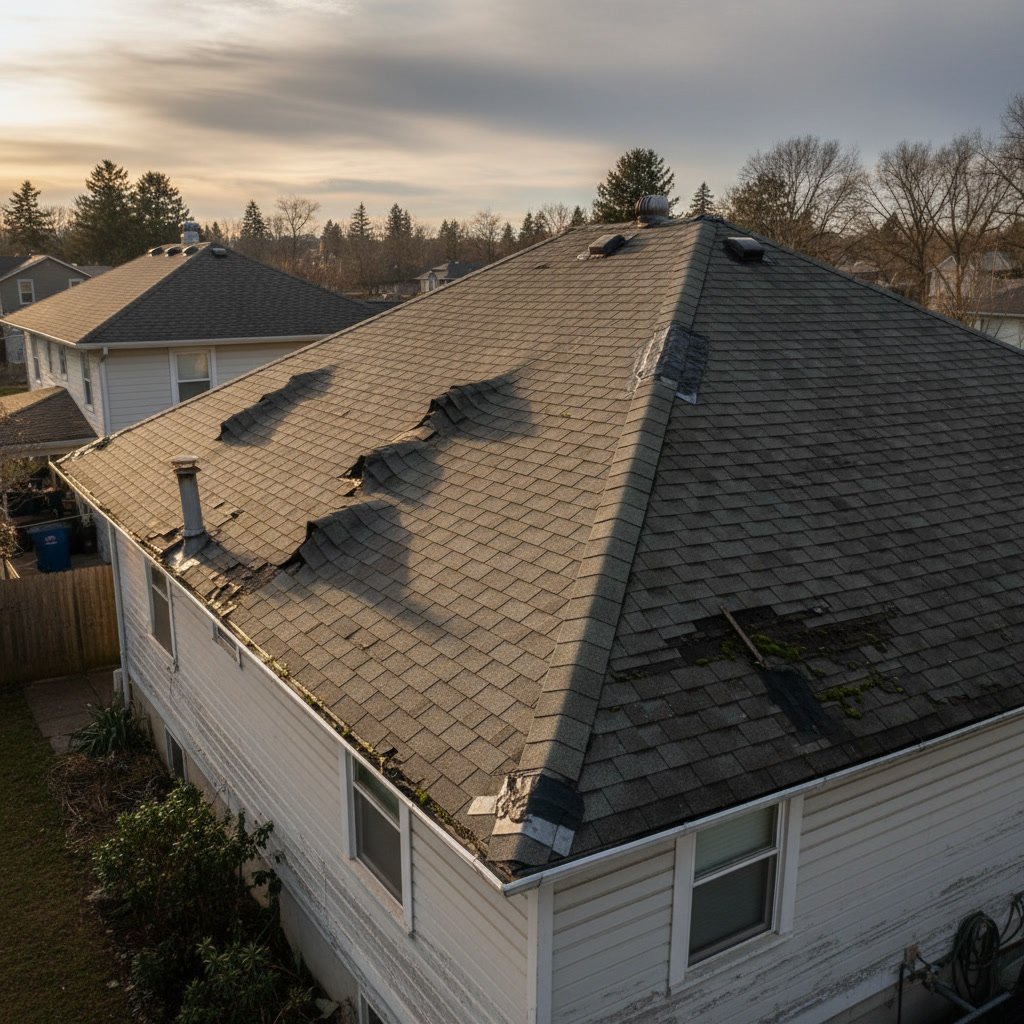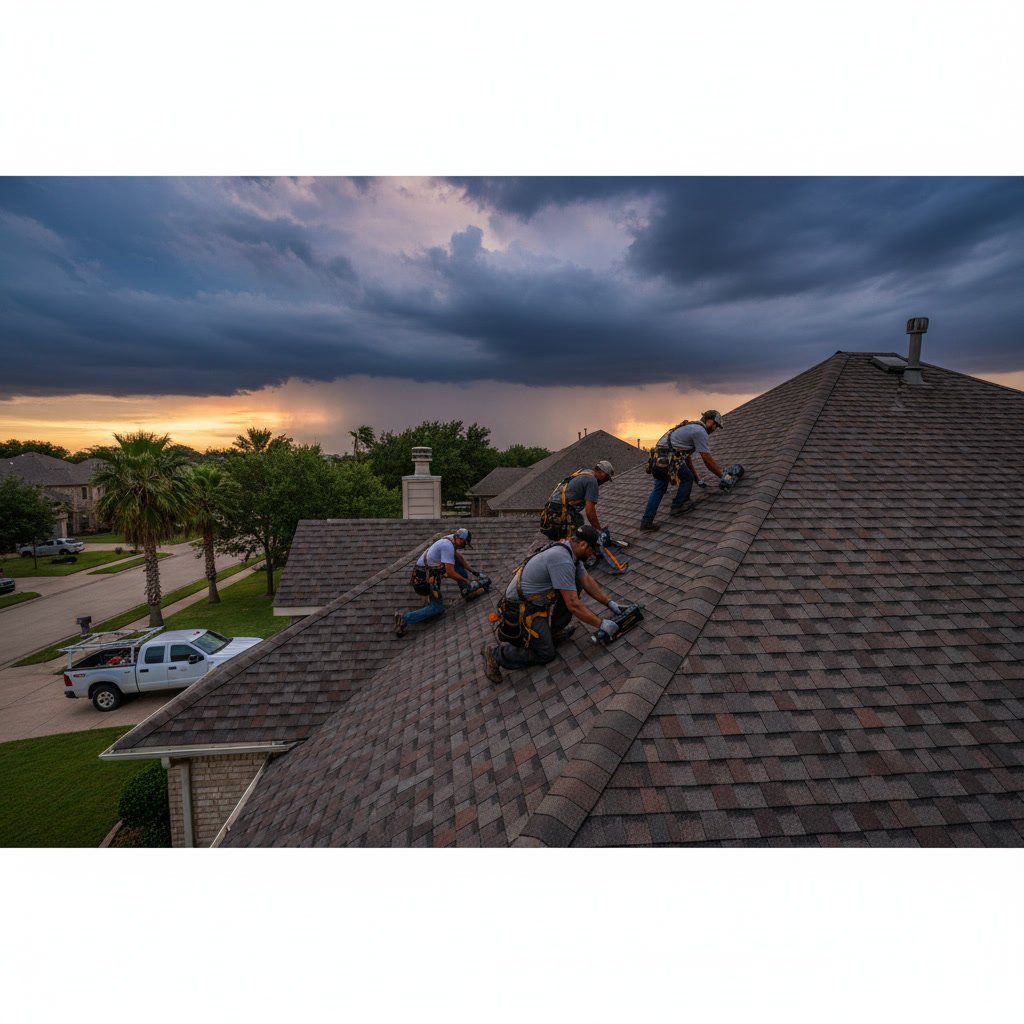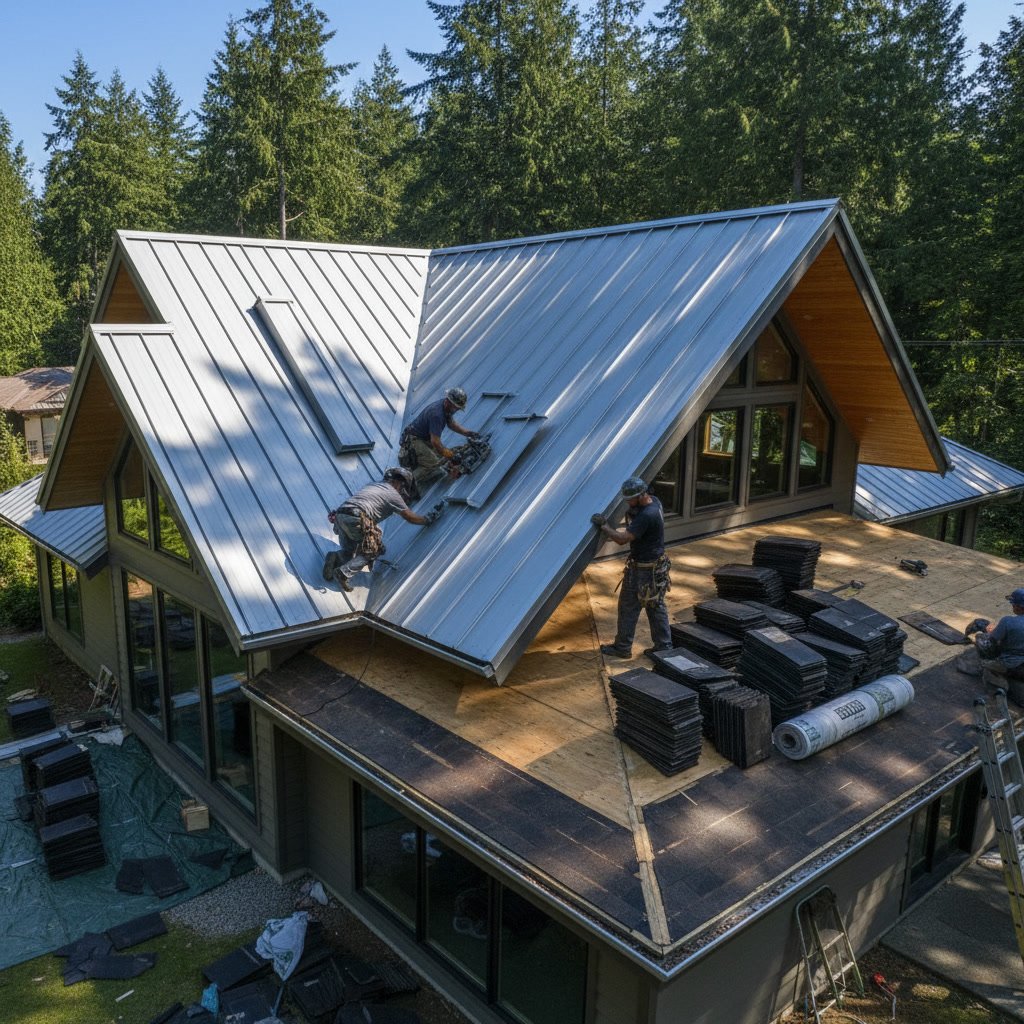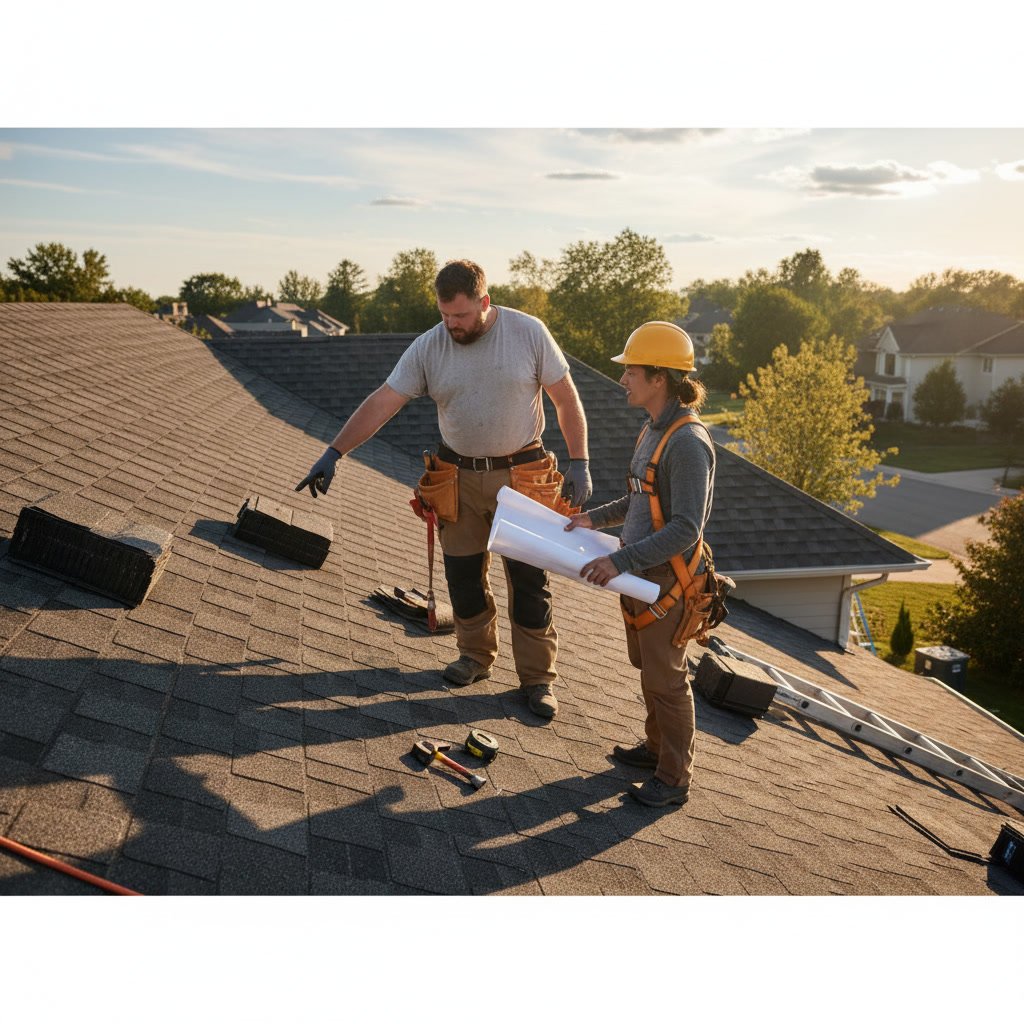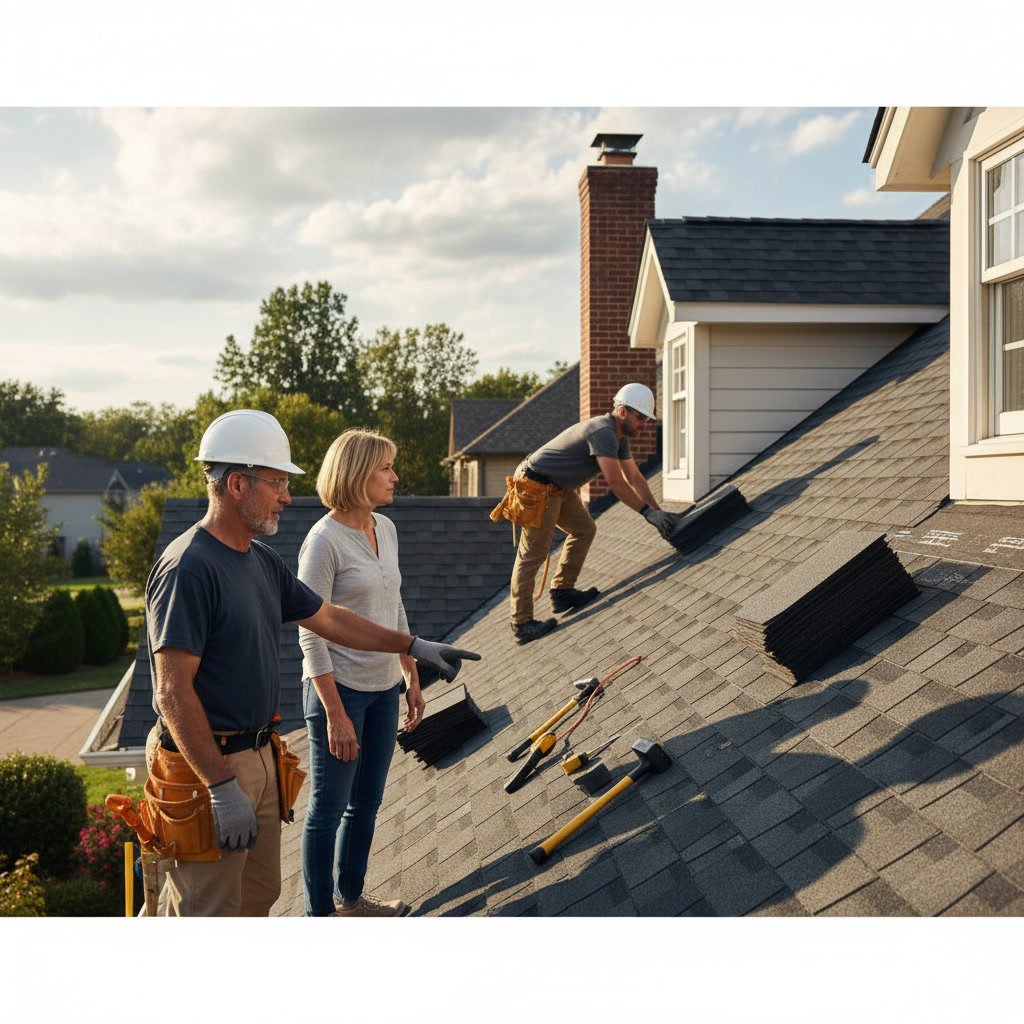
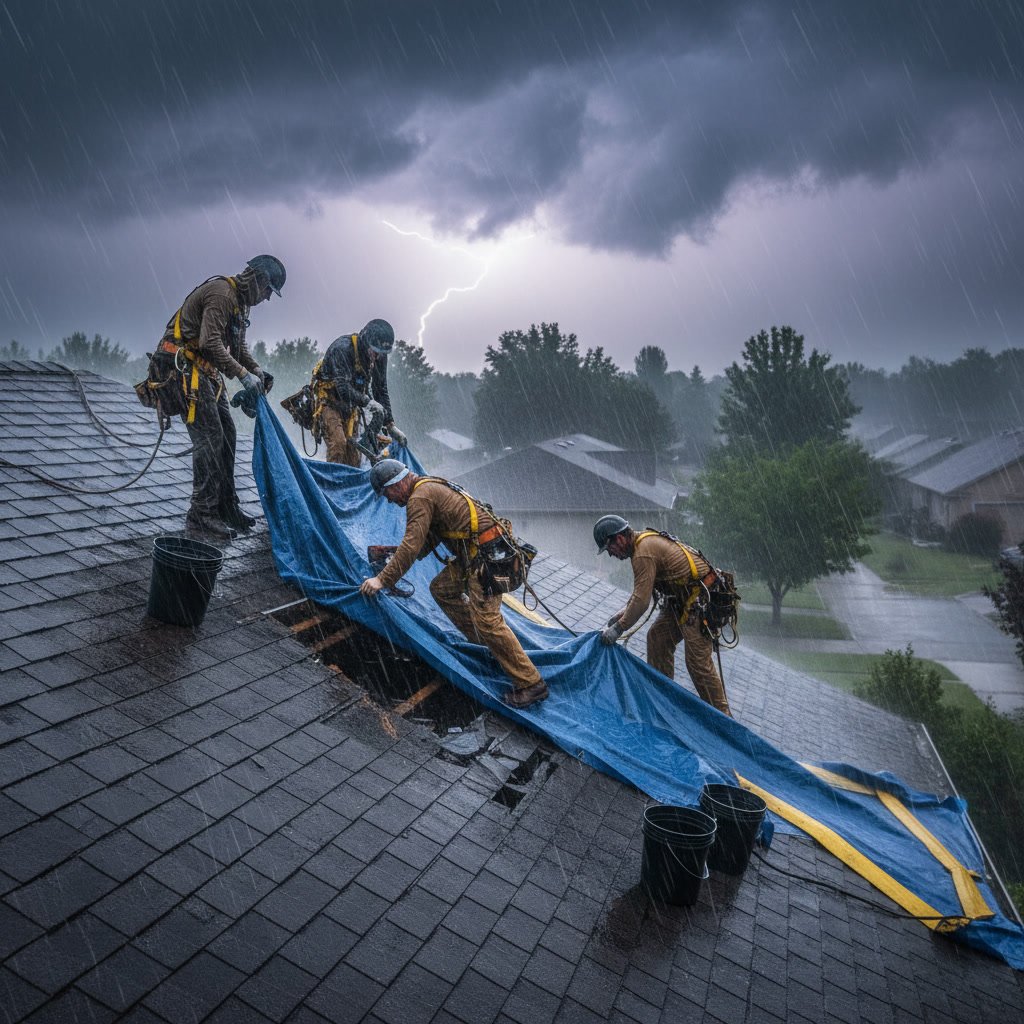
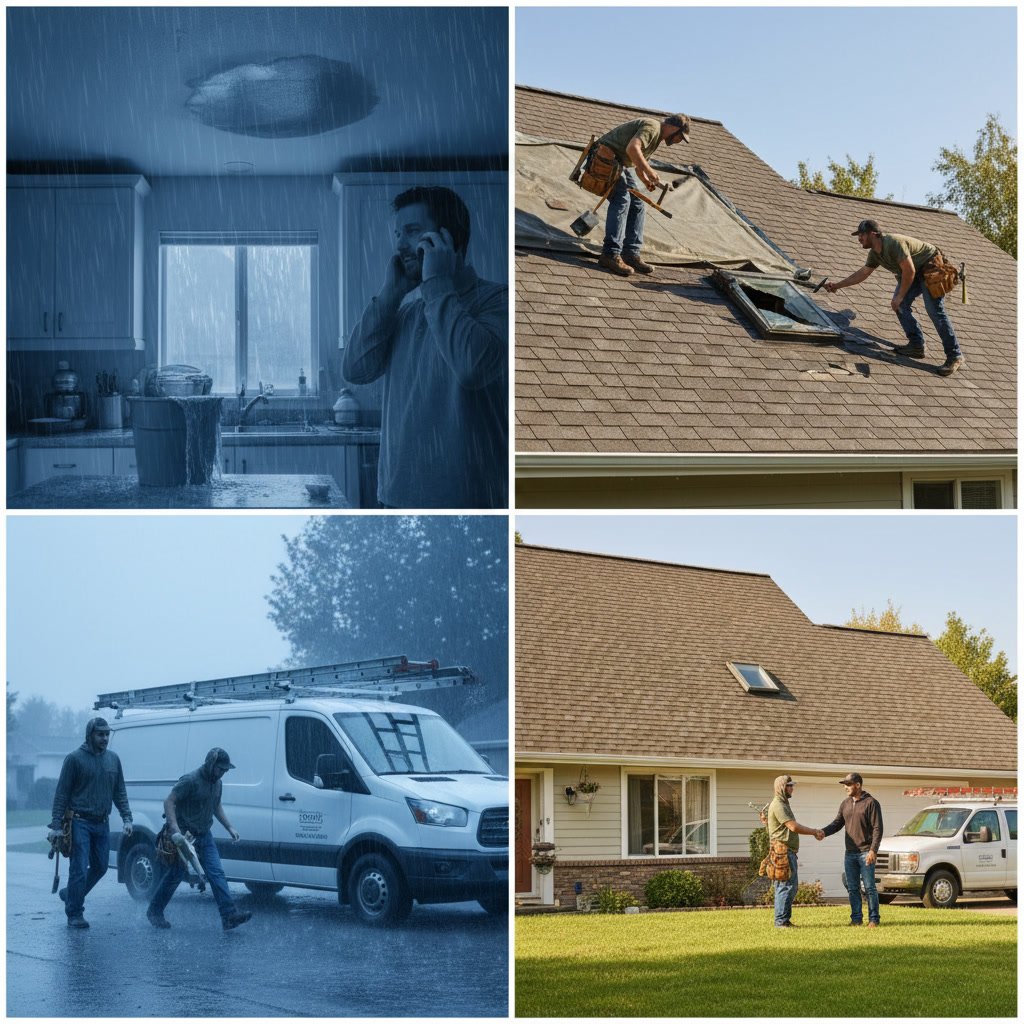
When water starts dripping through your ceiling, every minute counts. The emergency roof repair process begins the moment you call, with roofers working to stop active leaks within hours using temporary tarping, sealants, and patch materials. Once the immediate threat is contained, professionals assess the full extent of damage and create a permanent repair plan to restore your roof’s integrity.
Why Roof Emergencies Demand Immediate Response
Active roof leaks don’t wait for convenient business hours. Water intrusion spreads rapidly through roofing layers, saturating insulation, damaging ceilings, and threatening electrical systems. A leak that starts as a small drip during a storm can expand to cause thousands of dollars in interior damage within just a few hours.
Temperature plays a critical role in how quickly damage escalates. In Texas heat, moisture trapped in attic insulation creates ideal conditions for mold growth within 24 to 48 hours. The longer water sits, the more structural components weaken, turning a simple patch job into a complex repair requiring replacement of decking, rafters, or interior finishes.
The First Call: What Information Roofers Need in New Braunfels
When you contact a roofing company about an active leak, specific details help them arrive prepared with the right materials and equipment. Describe where water is entering your home, whether it’s a steady drip or flowing stream, and any visible damage to the ceiling. If safe to do so, note recent weather events like hail or high winds that might have caused the breach.
Roofers also need to know your roof type because different materials require different emergency solutions. Metal panels, asphalt shingles, and tile roofs each have distinct failure patterns and repair approaches. Sky Metal Roofing LLC uses this initial conversation to dispatch technicians with the appropriate materials, whether that’s tarp systems for large breaches or specialized sealants for metal seam failures.
Securing the Scene Before Climbing Up
Professional roofers don’t immediately climb onto a wet, damaged roof. The first step involves a safety assessment from ground level using binoculars or drone cameras when weather permits. Technicians check for structural instability, pooling water that adds weight, and electrical hazards from nearby power lines or damaged wiring.
During active storms, roofers typically wait for lightning to pass and wind speeds to drop below 20 mph. Working on a wet roof in dangerous conditions helps no one. Instead, professionals focus on interior damage control, placing buckets, moving furniture, and documenting damage for insurance purposes until exterior work becomes safe.
Temporary Leak Stoppage Techniques That Work
Once on the roof, technicians use a systematic approach to stop water entry. For punctures and small holes, they apply roofing cement or butyl rubber sealants that bond even to wet surfaces. These products create an immediate waterproof barrier, though they’re designed as temporary solutions lasting days to weeks, not permanent fixes.
Larger damaged areas require tarping. Professional-grade tarps are at least six millimeters thick and secured with wood battens screwed into solid decking, not just weighted down with sandbags. The tarp extends at least four feet beyond the damaged area in all directions, creating a watershed that channels water away from the breach. Proper installation includes running the tarp over the roof ridge when possible, preventing wind from getting underneath and lifting the material.
For metal roofing systems with seam failures, roofers use specialized clamps and sealant tapes designed for metal-to-metal applications. Standard roofing tar doesn’t adhere properly to metal surfaces and will fail within days.
Documenting Damage for Insurance and Repair Planning
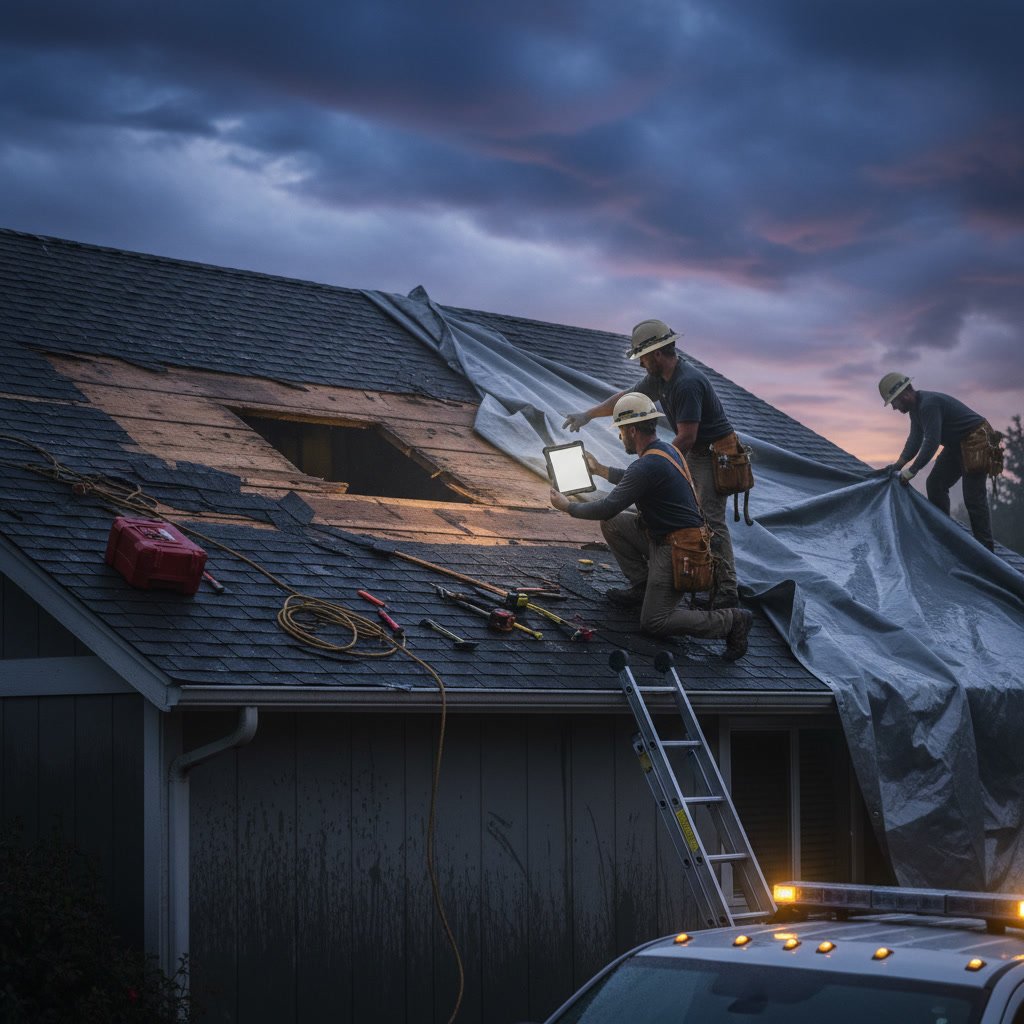
While making emergency repairs, experienced roofers photograph and measure all damage. This documentation serves two purposes: supporting your insurance claim and creating an accurate scope for permanent repairs. Photos should capture the damage from multiple angles, showing both the exterior breach and any interior water stains or structural damage.
Many homeowners don’t realize that emergency tarping costs are typically covered under insurance policies as part of immediate mitigation to prevent further damage. Keeping receipts and detailed notes about the timeline of the leak and response helps streamline the claims process. If you need assistance navigating this process, insurance claim support services can coordinate directly with adjusters.
Interior Damage Control Steps
Stopping the leak is only half the battle. Water that already entered your home needs immediate attention. Roofers often work with restoration specialists or advise homeowners on critical first steps like removing standing water, pulling back wet insulation, and setting up fans to dry affected areas.
Ceiling drywall that’s heavily saturated often needs replacement rather than drying, as it loses structural integrity and becomes prone to collapse. Wood framing requires moisture meter readings to determine if drying is sufficient or if replacement is necessary. Readings above 19% indicate moisture levels that support mold growth and wood rot.
Assessing Whether Repair or Replacement Makes Sense
Not every emergency requires a full roof replacement, but some damage is extensive enough that patching becomes ineffective. Roofers evaluate several factors during the emergency visit: the age of your roof, the extent of damage beyond the leak point, and whether the affected area shows signs of pre-existing deterioration.
A roof that’s already 15 to 20 years old with widespread granule loss, curling shingles, or multiple previous repairs might be better served by replacement than another patch. Investing hundreds in emergency repairs on a failing roof often leads to more leaks within months. If you’re weighing this decision, understanding whether your roof needs repair or full replacement helps make the most cost-effective choice.
Timeline From Emergency Call to Permanent Fix
The emergency response typically happens within two to six hours of your call, depending on the severity of weather and the volume of calls the company is handling. Temporary repairs that stop active leaking take one to three hours for most residential situations.
Permanent repairs follow a different timeline. After the emergency is stabilized, roofers schedule a detailed inspection during dry conditions, usually within three to seven days. This inspection produces a comprehensive repair estimate and timeline. Simple repairs like replacing a few damaged shingles or sealing a failed flashing joint might be completed within a week. More extensive repairs involving decking replacement or large sections of roofing material can take two to four weeks, depending on material availability and weather windows.
Working with specialized roof services ensures that complex repairs involving multiple roof systems like skylights, chimneys, or unusual roof geometries receive the expert attention they require.
Common Causes of Emergency Roof Failures
Understanding what causes sudden roof failures helps prevent future emergencies. Storm damage from high winds accounts for roughly 40% of emergency calls, with wind lifting shingle edges and breaking fastener seals. Hail creates punctures in metal roofing and cracks granules on asphalt shingles, creating entry points for water.
Tree impact from falling branches causes immediate, obvious damage, but nearby trees also drop leaves and debris that clog valleys and gutters. This debris traps water against roofing materials, accelerating deterioration and eventually causing leaks that seem to appear suddenly but actually developed over months. Regular gutter installation and cleaning prevents this type of water backup.
Flashing failures around chimneys, vents, and roof penetrations represent another major leak source. These metal components expand and contract with temperature changes, and the sealants securing them degrade over time. A flashing that was properly installed 10 years ago may have sealant that’s now cracked and brittle, allowing water to slip behind the metal during heavy rain.
What Emergency Repairs Cost and What Insurance Covers
Emergency tarping and temporary leak stoppage typically ranges from $300 to $800 for residential properties, depending on roof access difficulty, the size of the damaged area, and whether the work happens during normal hours or requires after-hours response. These costs are generally reimbursable under homeowners insurance as part of your duty to mitigate further damage.
Permanent repair costs vary dramatically based on damage extent. Replacing 10 to 20 damaged shingles and the underlying felt paper might cost $400 to $900. Replacing a section of damaged decking along with roofing materials above it can run $1,500 to $3,500. Full roof replacements following severe damage start at $8,000 to $12,000 for basic asphalt shingle systems and go significantly higher for premium materials.
Most policies cover sudden, accidental damage like storm impacts but exclude damage from deferred maintenance or gradual deterioration. If your roof was already in poor condition before the storm, insurance adjusters may deny or reduce claims. Maintaining documentation of regular maintenance and inspections strengthens your claim when damage does occur.
Protecting Your Home While Waiting for Permanent Repairs
Temporary repairs buy time, but they’re not meant to last months. Tarps degrade under UV exposure, battens can work loose in high winds, and sealants lose adhesion through repeated thermal cycling. Your job as the homeowner is to monitor the temporary fix and report any changes immediately.
Check your tarp after every significant rain or wind event. Look for lifting edges, tears in the material, or signs that water is seeping underneath. Inside your home, watch for new water stains, musty odors, or visible mold growth, which indicates the temporary repair isn’t holding or that moisture is trapped in building materials.
Schedule the permanent repair as quickly as possible. Don’t let a tarp sit for months while you wait for insurance settlements or try to save money. The longer your roof remains compromised, the more secondary damage accumulates. Water that enters around a tarp edge can travel along rafters for 10 or 15 feet before dripping through a ceiling, making the source difficult to locate and repair.
Choosing a Roofer You Can Trust During a Crisis
Roof emergencies attract storm chasers and unlicensed contractors who promise quick fixes but deliver shoddy work. Before allowing anyone on your roof, verify they carry both liability insurance and workers compensation coverage. Licensed contractors provide documentation immediately upon request.
Reputable companies provide written estimates before performing any work beyond emergency stabilization. They explain what they’re doing, why it’s necessary, and what it will cost. Be wary of contractors who demand full payment upfront or pressure you to sign contracts while you’re stressed and dealing with active water damage.
Sky Metal Roofing LLC serves homeowners throughout the region with transparent emergency services backed by licensing and insurance. When crisis strikes, you need a contractor who shows up prepared, works safely, and provides honest assessments rather than upselling unnecessary services.
If your roof is leaking right now or you’ve just weathered a severe storm, don’t wait for small problems to become major disasters. Immediate professional assessment protects both your home and your wallet. Contact Sky Metal Roofing LLC at +12104120026 for rapid emergency response and permanent repair solutions that restore your peace of mind.