Boerne homeowners know that outdoor living is more than a luxury. It’s a way of life in the Texas Hill Country. Yet without proper shade and protection, your patio becomes unusable during the scorching summer months or sudden spring storms. The right patio cover transforms your backyard into a year-round retreat, adding value to your home while creating space for family gatherings and quiet evenings outdoors.
This guide explores practical patio cover design ideas tailored specifically for Boerne’s climate, architectural styles, and outdoor living culture. You’ll discover options that work with your home’s existing structure, your budget, and your vision for the perfect outdoor space.
Why Boerne Homes Need Thoughtful Patio Cover Design
The Hill Country climate demands more from outdoor structures than many other regions. Summer temperatures regularly climb above 95 degrees, while sudden thunderstorms can deliver heavy rain and occasional hail.
A well-designed patio cover addresses these challenges head-on. It provides UV protection that keeps your outdoor furniture from fading and your family from overheating. It creates a dry zone during rain events, extending your usable outdoor time throughout the year. Most importantly, it complements the natural limestone, cedar, and regional architecture that defines Boerne’s character.
Your choice of patio cover also impacts energy efficiency. Proper coverage on south and west-facing patios can reduce heat gain through adjacent windows and doors, lowering your cooling costs during the long Texas summer.
Standing Seam Metal Patio Covers
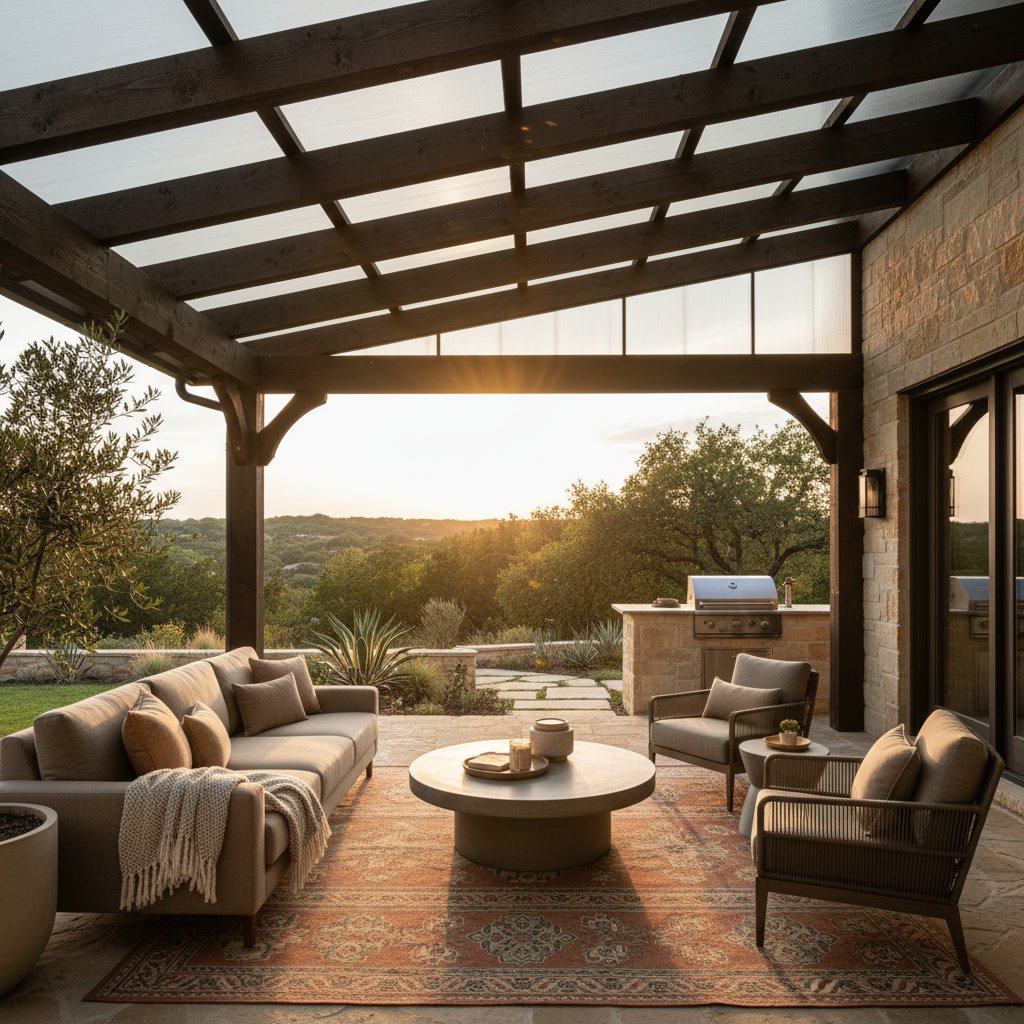
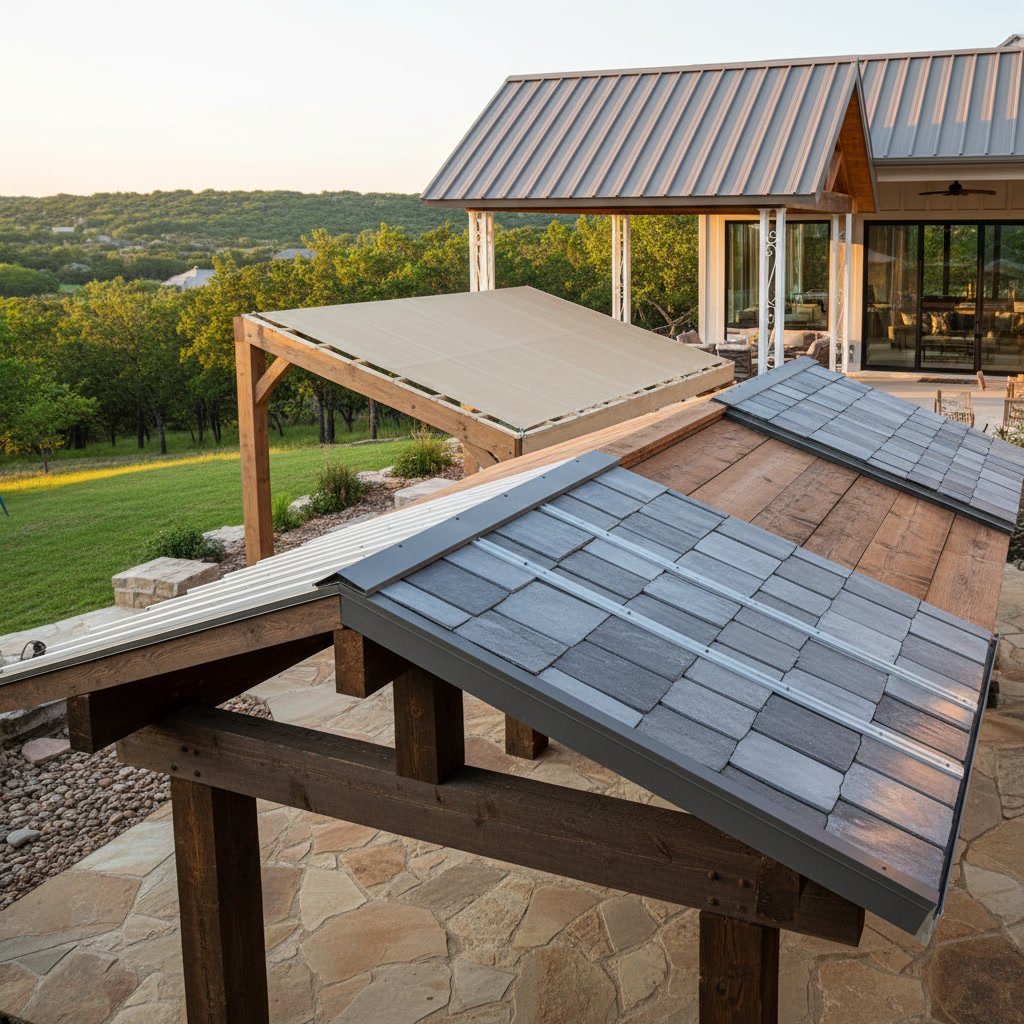
Standing seam metal roofing has become the premier choice for Boerne patio covers, and for good reason. The vertical panel design sheds water efficiently, resists wind uplift, and requires virtually no maintenance over its 40-plus year lifespan.
Metal patio covers excel in Hill Country conditions. They reflect solar heat rather than absorbing it, keeping the space beneath noticeably cooler than alternatives. The material won’t rot, warp, or support mold growth, even during humid periods.
Color and Finish Options
Modern metal roofing comes in dozens of colors and finishes. Light tans, grays, and bronze tones blend seamlessly with limestone exteriors common in Boerne neighborhoods. Darker charcoal and slate grays create striking contrast against light-colored homes.
Matte finishes reduce glare and provide a more traditional appearance, while high-gloss options offer a contemporary look. Most manufacturers offer 30-year paint warranties, ensuring your patio cover maintains its appearance for decades.
Integration With Existing Rooflines
The most cohesive designs connect your patio cover directly to your home’s existing roof structure. This approach creates a unified appearance and provides superior weather protection at the junction point. Matching the panel profile and color to your main roof enhances curb appeal and property value.
For homes where direct attachment isn’t feasible, freestanding metal structures with complementary design elements achieve a coordinated look. Sky Metal Roofing LLC specializes in both attached and freestanding metal patio installations throughout Boerne, TX.
Pro Tip: If your main roof uses standing seam metal, extending the same material over your patio creates the most seamless aesthetic and often simplifies the permitting process.
Gable and Hip Roof Patio Designs
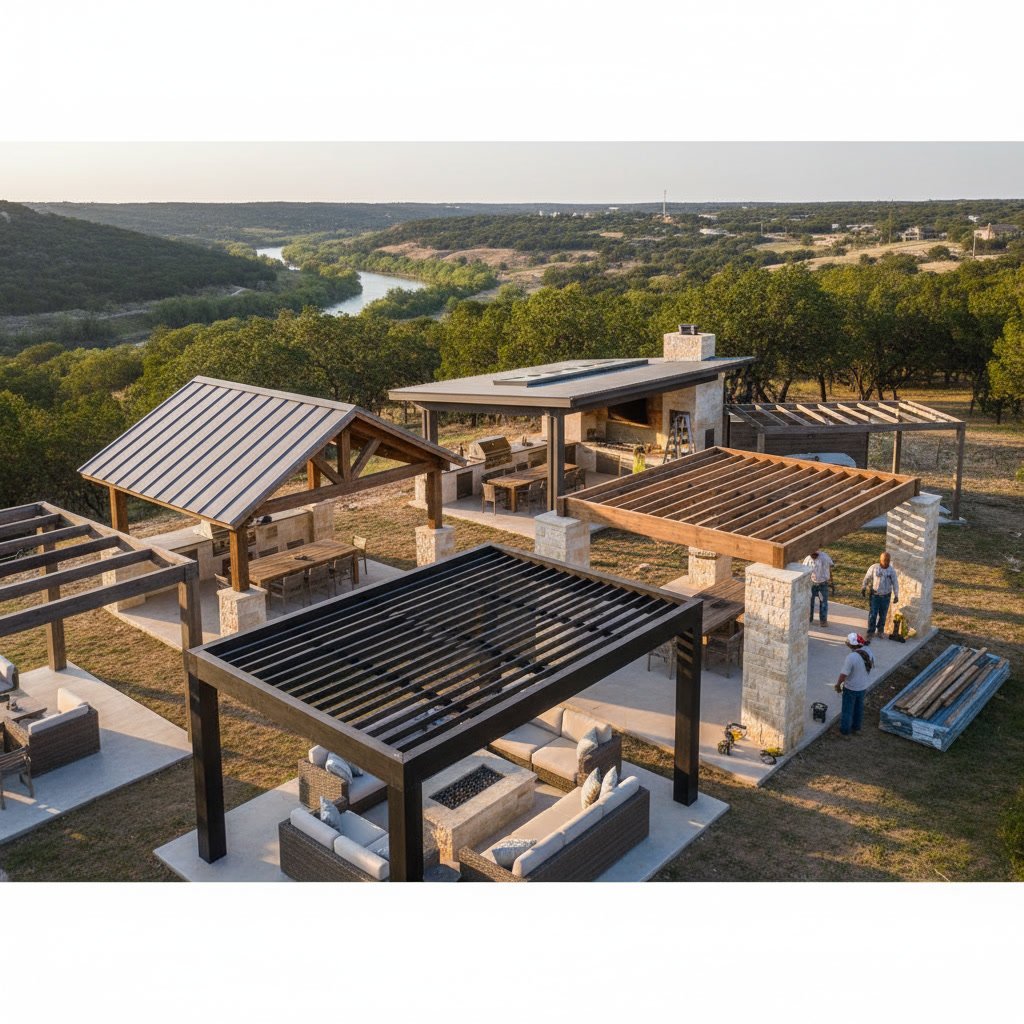
Traditional gable and hip roof structures bring classic architecture to your outdoor space. These pitched roof designs offer superior water drainage and create an enclosed room feel that flat or shed-style covers cannot match.
Gable patio covers feature two sloping sides that meet at a center ridge, creating the iconic triangular end view. This design provides maximum height at the center, allowing for ceiling fans, lighting fixtures, and a spacious feel even with standard post heights.
Hip roofs slope on all four sides, eliminating the vertical gable ends. This configuration offers better wind resistance, an important consideration during Hill Country storm events. The hip design also presents finished roofing on all sides, creating a more polished appearance from every angle.
Material Considerations for Pitched Covers
Pitched patio covers work with multiple roofing materials. Standing seam metal remains popular for its durability and low maintenance. Architectural shingles match most existing home roofs but require periodic replacement, typically every 20 to 25 years.
For those seeking a more rustic Hill Country aesthetic, metal panels with wood-grain finishes combine the durability of steel with the appearance of natural materials. These products resist fading, peeling, and the wood rot that plagues traditional cedar structures in humid climates.
Pergola Style Patio Cover Design Ideas
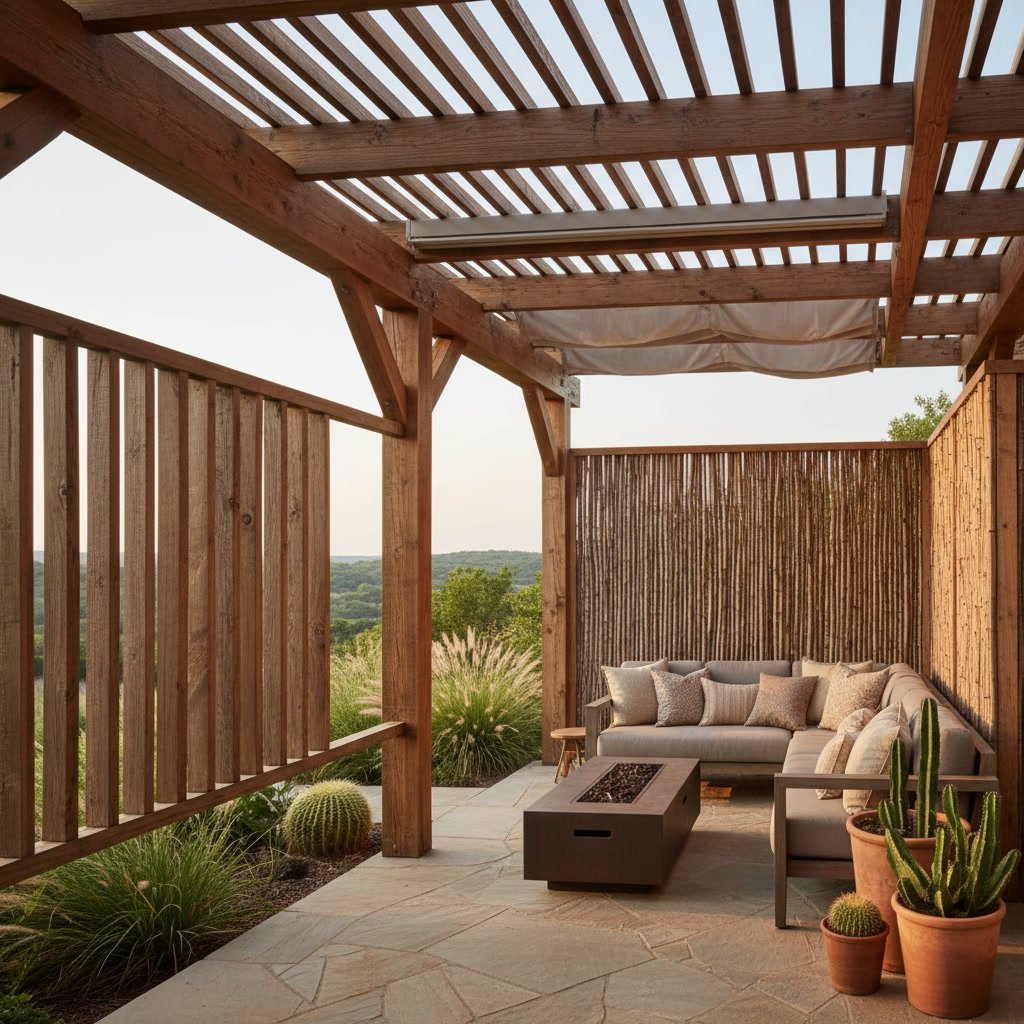
Pergolas offer a lighter, more open alternative to solid roof structures. The slatted or beamed top provides partial shade while maintaining airflow and allowing natural light to filter through. This design works particularly well for homes where full roof coverage would block desirable views or create a closed-in feeling.
Modern pergola designs often incorporate adjustable louvers that pivot to control sun exposure throughout the day. Open the louvers for full sun during cooler months, or close them for maximum shade when temperatures peak. Some systems integrate with smart home technology for automated adjustment based on time of day or temperature.
Traditional timber pergolas create a warm, natural aesthetic but require regular maintenance in Texas conditions. Staining or sealing every two to three years prevents weathering and extends the structure’s life. Powder-coated aluminum pergolas eliminate maintenance concerns while offering clean lines and contemporary styling.
Combining Pergolas With Fabric Canopies
Retractable fabric canopies mounted to pergola frames provide flexible coverage. Extend the canopy for full shade during peak sun hours, then retract it to enjoy starlight in the evening. Quality outdoor fabrics resist fading, mildew, and water damage for years of reliable use.
This hybrid approach delivers the architectural presence of a pergola with the practical sun protection of a solid cover. The fabric component requires replacement every five to eight years depending on sun exposure, but costs significantly less than repairing or replacing damaged solid roofing.
Covered Outdoor Kitchen and Dining Areas
Outdoor cooking and dining spaces require different coverage considerations than simple lounging areas. Heat from grills and smokers demands proper ventilation, while dining furniture needs reliable protection from rain and sun damage.
Extended roof overhangs work well for outdoor kitchens positioned adjacent to the home. This design provides solid coverage over cooking and prep areas while allowing smoke and heat to dissipate at the open sides. Minimum recommended overhang depth is eight feet to protect countertops and appliances from wind-driven rain.
For island-style outdoor kitchens set away from the house, hip roof pavilions offer coverage from all directions. Position the grill and cooking equipment on the side with prevailing winds to naturally vent smoke away from dining and seating areas.
Lighting and Electrical Integration
Covered outdoor dining spaces benefit enormously from integrated lighting. Recessed can lights provide general illumination for meal preparation and dining, while pendant fixtures over tables or bars add ambiance and style.
Plan electrical runs during patio cover construction rather than retrofitting later. Concealing wiring within roof structure and support posts creates a cleaner installation and protects connections from weather exposure. Include weatherproof outlets for small appliances, phone chargers, and seasonal lighting.
Key Takeaway: When planning patio cover design ideas for cooking spaces, ensure proper ventilation clearances above grills and position lighting to illuminate work surfaces without creating glare in dining areas.
Extending Your Patio Cover With Additional Features
The most functional outdoor living spaces integrate multiple elements beyond basic coverage. Consider these additions during your planning phase to maximize your investment and outdoor enjoyment.
Ceiling Fans for Air Circulation
Outdoor-rated ceiling fans make covered patios comfortable even during hot afternoons. Moving air creates a cooling effect that can make a space feel 10 to 15 degrees cooler than the actual temperature. Position fans to circulate air without creating uncomfortable drafts in seating areas.
Variable speed controls allow you to adjust airflow based on conditions and activity. Slower speeds work well during meals, while higher speeds provide relief during peak heat hours.
Integrated Misting Systems
High-pressure misting systems deliver dramatic temperature reduction in dry conditions. Fine water droplets evaporate quickly, pulling heat from the surrounding air. These systems work best during low-humidity periods typical of Hill Country summers.
Install misting nozzles around the perimeter of your patio cover, directing the mist outward to create a cooling curtain. Quality systems include timers and pressure regulators for efficient operation and minimal water waste.
Privacy Screens and Windbreaks
Partial walls, lattice panels, or planted screens transform open patio covers into semi-enclosed outdoor rooms. These features block sight lines from neighboring properties, reduce wind penetration, and create defined spaces for different activities.
Stone or stucco privacy walls match Hill Country architectural styles while providing permanent, maintenance-free screening. Wood or metal lattice with climbing vines offers a softer, more natural appearance that integrates greenery into your design.
Matching Patio Covers to Hill Country Architecture
Boerne’s architectural character blends Hill Country tradition with modern ranch and contemporary styles. Your patio cover should complement your home’s existing design language rather than appearing as an afterthought addition.
Traditional Hill Country homes feature natural limestone, exposed timber beams, and low-pitched metal roofs. Patio covers for these properties work best with heavy timber posts or stone columns supporting metal roofing that matches the main house. Exposed beam construction under the cover continues the rustic aesthetic while providing mounting points for fans and lighting.
Modern Hill Country designs emphasize clean lines, large overhangs, and indoor-outdoor flow. Sleek standing seam metal covers with minimal visible support structure complement these homes. Consider powder-coated steel posts in contemporary finishes or engineered beams stained to match interior wood tones.
Ranch-style properties benefit from extended gable or hip roof covers that mirror the home’s roofline. Using the same roof shingles or metal panels as the main roof creates seamless integration and enhances the home’s established character.
Budget Considerations and Project Planning
Patio cover costs vary widely based on size, materials, structural complexity, and integrated features. Basic aluminum pergola kits start around 2,000 to 3,000 dollars for materials, while custom standing seam metal structures with stone columns can reach 15,000 to 25,000 dollars or more.
Size represents the largest cost factor. A 12×12-foot basic cover costs substantially less per square foot than a 12×24-foot structure due to material efficiency and labor scaling. Determine your minimum functional size, then evaluate whether additional square footage fits your budget and enhances your outdoor living goals.
Attached patio covers typically cost less than freestanding structures because they use the existing house wall for structural support on one side. Freestanding designs require four-sided framing and additional foundation work, increasing both material and labor expenses.
Permitting and Code Requirements
Most patio cover installations in Boerne require building permits. Attached structures almost always need permits, while some jurisdictions exempt small freestanding covers under specific size thresholds. Working with a licensed contractor ensures proper permitting and code-compliant construction.
Setback requirements, height restrictions, and lot coverage limits affect where you can place your patio cover and how large it can be. Review these regulations early in your planning process to avoid designing a structure that cannot be permitted on your property.
Professional installation by experienced contractors like those at roofing services providers familiar with local codes eliminates permitting headaches and ensures your structure meets all structural and safety requirements.
Maintenance and Long-Term Performance
Different patio cover materials require varying maintenance levels over their lifespan. Understanding these requirements helps you choose designs that fit your lifestyle and long-term property plans.
Metal patio covers need minimal attention. Annual inspections to check for loose fasteners, debris accumulation in valleys or gutters, and proper drainage typically suffice. The material won’t rot, crack, or support insect damage, eliminating the repair cycles common with wood structures.
Wood pergolas and timber-frame covers require more frequent maintenance. Plan to clean, inspect, and reseal or restain every two to three years. Check for signs of rot at ground contact points and where water can collect. Replace damaged boards promptly to prevent structural issues.
Fabric elements like retractable canopies need regular cleaning to remove pollen, dust, and organic debris. Most outdoor fabrics clean easily with mild soap and water. Retract fabric during severe weather to prevent wind damage and extend the material’s service life.
Pro Tip: Schedule annual inspections of your patio cover along with your main roof maintenance. Many contractors offer combined inspection services that identify issues early and prevent minor problems from becoming expensive repairs.
Storm Protection and Weather Resilience
Hill Country weather brings intense sun, heavy rain, occasional hail, and strong winds during storm events. Your patio cover must withstand these conditions while continuing to protect your outdoor investment.
Wind resistance depends primarily on proper structural design and secure attachment. Metal patio covers engineered to local wind loads resist uplift forces that can damage or destroy inadequate structures. Ensure your contractor uses appropriately rated fasteners and attachment methods for your specific installation.
Hail resistance varies by material. Metal roofing resists hail better than most alternatives, with dents being primarily cosmetic rather than structural concerns. Thicker gauge metal and certain panel profiles offer enhanced hail resistance for properties in high-risk areas.
If your patio cover sustains storm damage, document the condition thoroughly with photos and contact your insurance provider promptly. Many homeowner policies cover patio structures, and experienced contractors offer insurance claim support to help you navigate the repair process.
Frequently Asked Questions
What is the most durable patio cover for Texas weather?
Standing seam metal patio covers offer the best combination of durability, longevity, and low maintenance for Texas conditions. The material resists UV damage, sheds water efficiently, and typically lasts 40 years or more with minimal upkeep. Metal also provides superior fire resistance compared to wood or fabric alternatives.
How much does a patio cover add to home value in Boerne?
Quality patio covers typically return 50 to 80 percent of their installation cost in added home value, with well-designed structures in desirable locations performing at the higher end of that range. Outdoor living spaces are highly valued in the Hill Country market, and professional installations that complement the home’s architecture provide the best returns.
Do I need a permit for a patio cover in Boerne?
Most patio cover installations in Boerne require building permits, particularly for attached structures or covers exceeding certain size thresholds. Permit requirements ensure your structure meets local building codes for wind resistance, structural integrity, and setback compliance. Licensed contractors handle permitting as part of their service.
Can I add a patio cover to an existing concrete slab?
Existing concrete slabs can often support patio cover structures, but the slab must be thick enough and properly reinforced to handle the additional load. A structural evaluation determines whether your existing slab is adequate or if additional footings are needed for support posts. Most contractors include this assessment during the estimate process.
What is the ideal size for a patio cover?
The ideal patio cover size depends on how you plan to use the space. A 12×12-foot cover accommodates a small dining table and chairs, while 12×20 feet or larger works better for combined dining and lounge seating. Consider traffic flow around furniture, door swings, and whether you want the cover to extend beyond your patio slab for additional protected area.
Creating Your Perfect Boerne Outdoor Living Space
The right patio cover transforms your outdoor area from an underused backyard into a functional extension of your home. Whether you choose the durability of standing seam metal, the classic appeal of a gable roof design, or the open feel of a modern pergola, your selection should match your lifestyle, your home’s architecture, and the demands of Hill Country weather.
These patio cover design ideas provide a starting point for planning your outdoor living project. The best results come from working with experienced professionals who understand local conditions, building requirements, and design integration. Sky Metal Roofing LLC brings decades of combined experience to every patio cover installation in Boerne and throughout the San Antonio region.
Ready to discuss your patio cover project? Contact Sky Metal Roofing LLC at +12104120026 to schedule a consultation. Our team will evaluate your property, discuss design options that complement your home, and provide a detailed estimate for your custom outdoor living space.